


The Minister of State for Science, Technology and Innovation, Hon. Eng. Jonard Asiimwe Akiiki, has challenged Makerere University to accelerate the conversion of research and innovations into products, businesses and industries that contribute to Uganda’s economy.
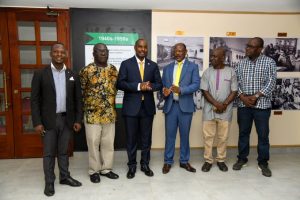
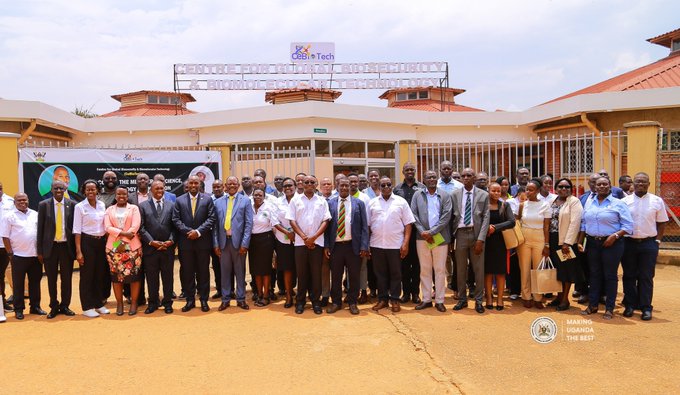
Akiiki made the remarks during his maiden ministerial visit to Makerere University, where he engaged researchers, scientists, innovators, faculty and students and toured research facilities, exhibitions, the Makerere Museum and the University Souvenir and Gift Shop.
The visit, held on September 16 and 17, was conducted under the theme “Research Infrastructure, Emerging Technologies and Enterprise Creation.”
The Minister said Makerere has significant research capacity but needs stronger systems to move innovations beyond academic research and into commercial production.

“I am taking time to understand what already exists, what challenges remain, and what support is required to move promising research and innovations towards commercialisation, production and enterprise development,” Akiiki said.
“The deeper we engage, the clearer the opportunity becomes. Makerere has significant knowledge and research capability. Our task is to strengthen the pathways that move this work from research into technologies, products, industries and economic value for Uganda.”
Six areas identified for collaboration
Following his engagements with researchers and innovators, Akiiki proposed that Makerere and the Science, Technology and Innovation Secretariat work together to identify a focused portfolio of high-potential innovations that can progress towards certification, licensing, government procurement or investment within defined timelines.
The Minister also proposed thematic engagements beginning with Artificial Intelligence for Health and the pathogen economy, before expanding to mobility, agro-industrialisation, advanced materials, digital transformation and other national priorities.

Another proposal is the establishment of a structured university-industry exchange model through which knowledge and experience can move between researchers and the private sector.
Akiiki also called for sustainable models for accessing, staffing and maintaining strategic laboratories and common-user research facilities.
The sixth proposal involves strengthening Makerere’s commercialisation function so that innovators can receive coordinated support in intellectual property, regulation, standards, business modelling, investment and market access.
The Minister further proposed developing a plan to position the Makerere Museum as a national attraction, educational resource and potential source of institutional revenue. “Makerere’s history gives it prestige, but its future must give Uganda prosperity,” Akiiki said.
From research to market
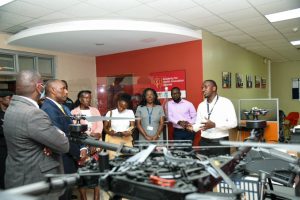
During the visit, Akiiki toured exhibitions and interacted directly with researchers working in different fields.
He cited Kiira Motors Corporation, which originated from research and innovation at Makerere, as an example of how university research can eventually develop into an enterprise.
The Minister said the experience should encourage the university to create pathways through which more innovations can move from laboratories into commercial production.
“Makerere should no longer derive pride in first-class degrees and PhDs, but in problems solved and products moved to market,” he said.
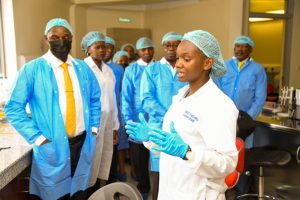
The Minister also visited the College of Health Sciences and the Infectious Diseases Institute, where he engaged an international consortium of researchers and scientists involved in efforts to combat Ebola.
Makerere University Vice Chancellor Prof Barnabas Nawangwe thanked the Minister for visiting the university and engaging directly with its research and innovation community.
Nawangwe said the university was committed to working with the STI Secretariat to strengthen the contribution of research and innovation to Uganda’s development.
The visit comes as government continues to emphasise the commercialisation of scientific research and the development of locally generated technologies as part of Uganda’s broader industrialisation strategy.