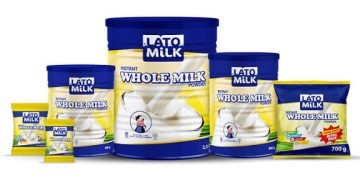



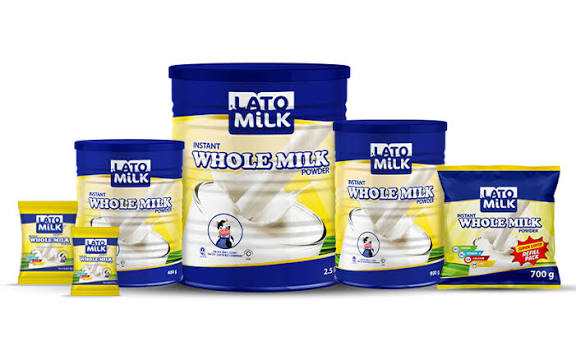
NAKURU, Kenya — Kenya is turning to neighbouring Uganda for milk supplies as prolonged dry conditions and declining local production leave the country’s dairy sector struggling to meet domestic demand.
Kenya’s Cabinet Secretary for Investments, Trade and Industry Lee Kinyanjui confirmed on September 5 that the country is importing milk from neighbouring countries, including Uganda, to bridge the supply gap.
Speaking during the Catholic Diocese of Nakuru Family Day, Kinyanjui said Kenya currently does not produce enough milk for its domestic market and urged farmers to increase production.
“Locally we are not able to meet our demand, so we are actually importing from our neighbouring countries like Uganda, and we believe that this is not where the country should be,” Kinyanjui said.
He said the government would support farmers to increase production and help Kenya return to self-sufficiency in milk.
The development comes as Kenya’s own dairy industry faces a seasonal supply squeeze. The Kenya Dairy Board (KDB) reported that formal milk deliveries to processors fell by 3.7 per cent, from 84.4 million litres in June to 81.3 million litres in July 2026. The Board said preliminary indications pointed to a further decline in August.
The decline has been linked largely to dry and cold weather, which has reduced pasture and increased pressure on fodder supplies in major dairy-producing areas.
Kenya’s Principal Secretary for Livestock Development, Jonathan Mueke, described the problem as “fodder pressure due to lack of rain,” according to reports.
The supply constraints have already been felt by consumers. Some supermarkets have reported reduced stocks, while certain milk brands and pack sizes have become harder to find. The KDB, however, has said the shortage is temporary, and that milk remains available on the market.
Temporary shortage
As Kenya looks to Uganda for milk, Uganda’s own dairy industry is also feeling the weight of the dry season.
Over the weekend, Ugandan dairy processor JESA Farm Dairy announced a temporary shortage of its milk products, attributing the disruption to prolonged dry weather and reduced milk yields among dairy farmers.
“We are experiencing a temporary shortage due to the prolonged dry season, which has affected all dairy farming communities and led to reduced milk production,” JESA management said in a notice to customers.
The company said the dry conditions had affected pasture and water availability at its farm in Busunju and among its network of out-grower farmers in central Uganda. JESA asked customers for patience while it works to restore supplies.
JESA later told customers that milk supplies were “tighter than usual because of the dry season” but said it was working to restore normal supply.
Why Uganda?
Uganda has emerged as one of East Africa’s major dairy producers and has developed a growing market for processed dairy products.
According to recent reporting, Uganda produced about 5.4 billion litres of milk in 2024, up from 3.85 billion litres in 2023. Dairy exports, including UHT milk, milk powder, casein and whey products, were valued at about $285.4 million in 2024, up from $264.5 million the previous year.
The country’s major dairy-producing areas include Ankole, Mbarara, Masaka and Ntungamo, which have helped supply both domestic processors and regional markets.
Uganda’s dairy industry has also increasingly shifted from simply exporting raw milk to processing milk into products with longer shelf lives, including milk powder and other dairy products. That gives processors greater flexibility when regional demand changes.
Kenya and Uganda also have an existing framework aimed at easing movement of agricultural commodities across their shared border.
A Mutual Recognition Agreement signed in December 2025 under a COMESA-supported process seeks to reduce duplication in inspection, testing and certification and improve cross-border trade. However, it was not created specifically as a milk-import agreement.
A regional dairy paradox
Kenya and Uganda produce broadly similar volumes of milk annually, yet their markets can find themselves in very different positions.
Kenya’s annual production has been estimated at around 5.2 to 5.4 billion litres, close to Uganda’s output. But weather shocks, fodder shortages and the structure of smallholder dairy farming can quickly expose gaps between production and consumption.
Uganda, meanwhile, has built a reputation as a regional dairy supplier.