


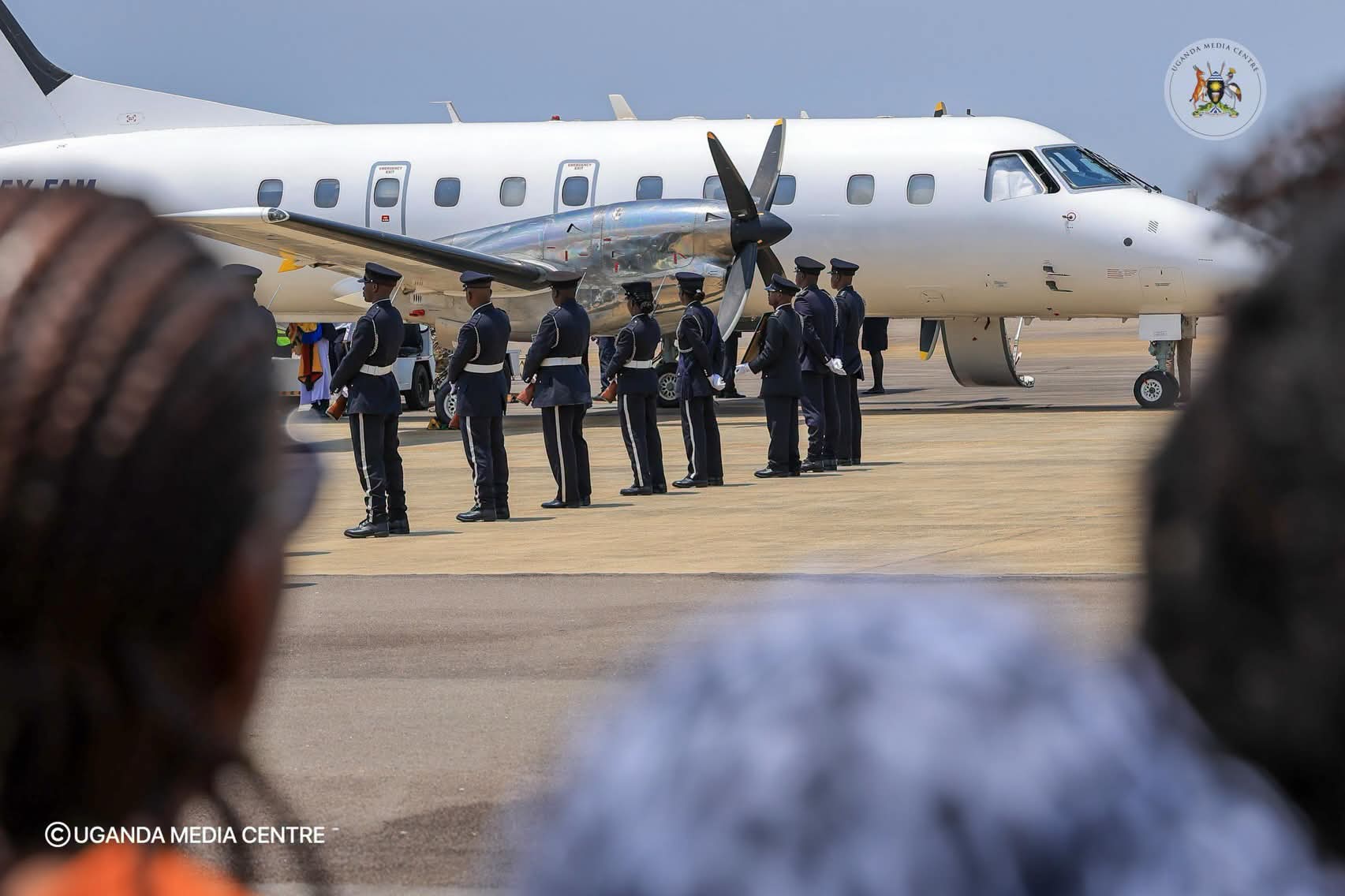
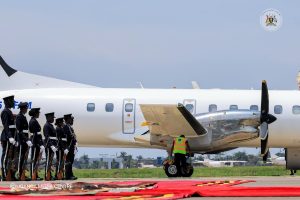
Entebbe — The aircraft carrying the remains of the late Tooro King, Omukama Oyo Nyimba Kabamba Iguru Rukidi IV, has landed at Entebbe International Airport, bringing the 34-year-old monarch home for his final journey.
The arrival on Friday morning marked the beginning of the formal funeral programme for a king whose extraordinary life began with an extraordinary contradiction: he inherited a centuries-old throne before he was old enough to understand what a kingdom was.
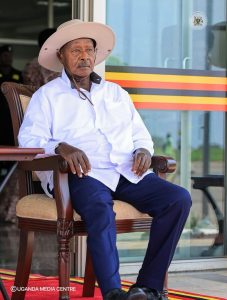
President Yoweri Kaguta Museveni was at Entebbe to receive the remains and pay his final respects to the fallen monarch.
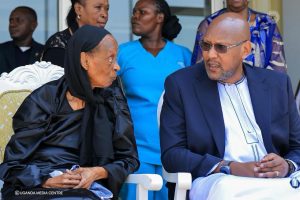
The Queen Mother, Best Kemigisa, members of the royal family, Tooro Kingdom officials, government representatives and cultural leaders also gathered at the airport amid a sombre atmosphere.
Uganda Police draped the casket in the colours of both Uganda and the Tooro Kingdom before it was wheeled through a guard of honour.
President Museveni then paid tribute to the late King and laid a wreath before the casket.
The remains are being transferred to a waiting helicopter for the next stage of the journey to Kyegegwa District.
The scenes at Entebbe brought together two dimensions of Uganda’s public life that often sit uneasily beside each other: the modern republic and the older institutions of kingship that survived colonialism, abolition and restoration.
King Oyo was only three years old when he ascended the Tooro throne on September 12, 1995, following the death of his father, Omukama Patrick Olimi Kaboyo. He remained one of the world’s youngest reigning monarchs throughout his life.
Because of his age, the early years of his reign were guided by regents, including President Museveni, Queen Mother Best Kemigisa and Princess Elizabeth Bagaya. Princess Bagaya, his aunt, played a prominent role in guiding the young monarch during his childhood.
Thirty-one years later, the symbolism of his return home is difficult to escape.
Oyo ascended the throne on September 12, 1995. He will be buried on September 12, 2026 — the 31st anniversary of his coronation.
His reign, which began with a child being carried into the machinery of monarchy, ended with a nation watching his coffin arrive at an international airport.
From Entebbe to Kyegegwa
The funeral arrangements have been revised to allow thousands of Tooro subjects along the Mubende–Fort Portal route an opportunity to see the King one last time.
After the arrival at Entebbe, the remains are being flown to Kyegegwa. From there, the royal cortege will travel slowly by road through Kyegegwa, Kyenjojo and Kabarole before reaching Karuziika Palace in Fort Portal City.
The decision to use a road procession was influenced by requests from mourners who wanted to line the route and bid farewell to their monarch.
Fr Charles Oyo, Head of Communications in the Office of Omujwera Musuuga, said the procession would move slowly enough for people to wave and pay their respects, although the body would not make numerous stops for public viewing.
Once the remains reach Karuziika Palace, the official nine-day cultural mourning period will begin.
Under Tooro tradition, the palace will become the centre of the royal funeral rites before the King is taken to the Karambi Royal Tombs for burial.
A kingdom mourns
President Museveni announced an official burial for King Oyo shortly after his death and directed that Uganda’s national flags be flown at half-mast for three days: the day before the burial, the burial day and the day after.
Museveni also revealed that the government had supported the King and his family during his medical treatment abroad.
The President described Oyo’s death at 34 as an especially painful loss, noting that the monarch had been orphaned young and had himself died young.
The government has also covered the medical and repatriation costs associated with bringing the King’s remains from the United States to Uganda.
King Oyo died in the United States on August 27, 2026, after receiving medical treatment. His death brought to an end one of the most unusual royal stories in contemporary Uganda: a child king who grew into an adult monarch and spent almost 31 years at the head of the Tooro Kingdom.
Now the kingdom must confront the question that follows every death of a monarch: what happens to the institution after the individual is gone?
For Tooro, the answer will be shaped by royal tradition, the Babiito clan and the question of succession. But before that political and cultural future is determined, there is a more immediate ritual.
A king has come home.
And along the roads from Kyegegwa to Fort Portal, thousands are expected to stand and watch him pass for the last time.