


KAMPALA — Women entrepreneurs benefiting from the World Bank-funded Generating Growth Opportunities and Productivity for Women Enterprises (GROW) Project have been urged to use borrowed funds strategically, strengthen their businesses and take advantage of training and mentorship opportunities to improve their long-term sustainability.
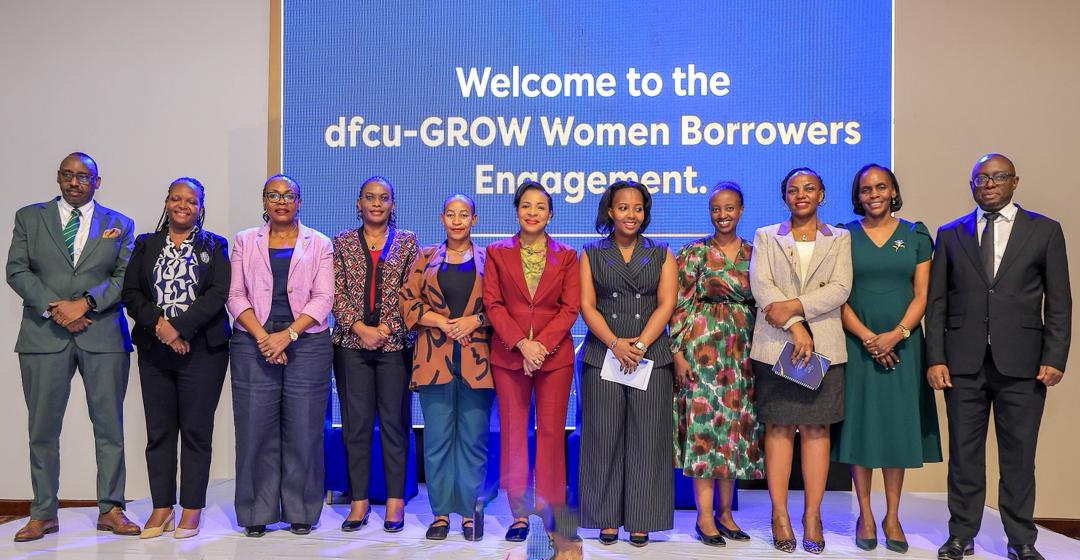
The call was made during a DFCU-GROW Women Borrowers Engagement session, which brought together women who have received financing under the programme to reflect on their business journeys, assess progress and share experiences and lessons from using the loans.
The engagement also brought together representatives from the Ministry of Gender, Labour and Social Development, the World Bank, the Private Sector Foundation Uganda (PSFU), the GROW Project and DFCU Bank.

In her speech, read by John Ssengendo, Project Coordinator and Monitoring and Evaluation Specialist for the GROW Project, Minister of State for Gender, Labour and Social Development (Gender and Culture), Hon. Mary Kuteesa Kamuli, said GROW was designed to create sustainable enterprises rather than simply provide women with money.
“This project is not just about giving money. It is about building sustainable enterprises,” the Minister said.
She said women remain central to Uganda’s economy but continue to face barriers in accessing productive assets, credit and public procurement opportunities. “This gap is not just unfair; it is economically expensive,” she said.

The Minister said the government’s focus was to ensure that women-owned businesses receive not only financing but also the knowledge and support required to grow. “GROW is not merely a social programme. It is a core economic growth strategy,” she said.
According to the Minister, the programme targets 60,000 women-owned enterprises and seeks to reach hundreds of thousands of beneficiaries, while improving the livelihoods of families and other people linked to women-led businesses.
She said more than Shs160 billion had already been disbursed to more than 10,000 women entrepreneurs through participating financial institutions.

Kuteesa challenged financial institutions to reconsider traditional collateral requirements that can exclude women with viable businesses. “I therefore challenge financial institutions to accept alternative assets, equipment and other forms of security where appropriate,” she said.
“A sewing machine is an asset that can create jobs. A restaurant refrigerator is an asset that supports a business. Such productive assets should be recognised for what they are.”
The Minister also urged women to move beyond traditional areas of business into sectors such as construction, transport, manufacturing and oil and gas supply chains.
dfcu Chief Retail Banking Officer Annette Kiconco said the bank had supported hundreds of women through GROW financing and complementary business development initiatives.
“Today, DFCU has disbursed UGX 24.2 billion under the GROW project to 496 women-owned enterprises,” Kiconco said.
She said the bank’s involvement goes beyond lending, with efforts aimed at helping entrepreneurs improve record-keeping, comply with tax requirements and make their businesses more bankable.
“Some potential beneficiaries did not have proper bookkeeping or proper business records, making it difficult for us to assess them for financing,” she said.
Kiconco said DFCU responded by providing business advisory and capacity-building support through its Women in Business Advisory Board and DFCU Foundation.
She said the bank had also recorded a strong loan repayment performance, with its non-performing portfolio under the programme remaining below two per cent.
“Through GROW, 215 women have already completed specialised business management training programmes in Mbarara, Jinja and Kampala,” Kiconco said.
World Bank GROW Project Task Team Lead Serena Cavicchi said access to capital needed to be matched with the skills required to manage and grow a business.
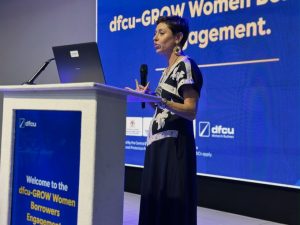
“Through GROW, 215 women have already completed specialised business management training, because access to finance must be matched with the capability to use it effectively,” Cavicchi said.
Paul Nuwagaba, Access to Finance Specialist at the GROW Project, urged women who had not yet accessed financing to engage participating financial institutions.
“The money is still out there. Engage with the participating financial institutions and find out how you can access it,” Nuwagaba said.
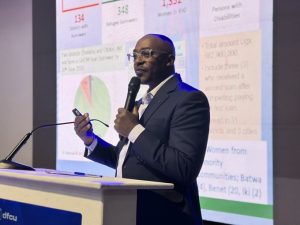
Dr Ruth Aisha, GROW Project Coordinator, said the programme was also working to address structural barriers that prevent women from being recognised as independent business owners when seeking credit.
“We are working to ensure that women with viable businesses are recognised and supported as independent entrepreneurs when they seek access to finance,” she said.
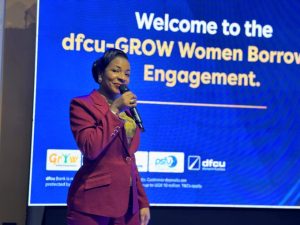
Ssengendo urged borrowers to approach credit as a business tool that must be carefully planned rather than money to be borrowed simply because it is available.
“The right question is not simply, ‘Why should I borrow this money?’ It is also, ‘What should be the right mix between my own equity and debt, when should I borrow, and for what?’” he said.
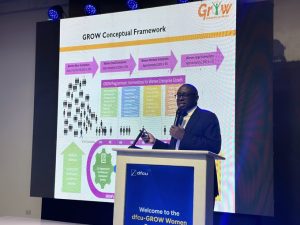
He also highlighted the Work Placement Programme, which gives women between 30 and 60 days of practical, on-site training in host enterprises to build skills and improve business performance.
Margaret Karume, Executive Director and Chief Credit Officer at DFCU Bank, said the success of the programme should ultimately be judged by the businesses women build with the financing.
“The impact of GROW is not measured by access to finance alone. It is measured by the businesses that grow, the jobs they create and the opportunities they unlock,” Karume said.
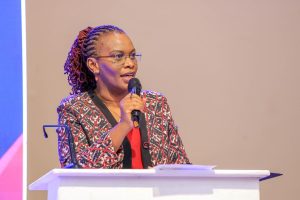
She said DFCU would continue supporting women with more than credit. “dfcu’s commitment goes beyond providing finance. We want women entrepreneurs to have the knowledge, connections and financial support needed to build sustainable enterprises,” she said.
PSFU Chief Executive Officer Stephen Asiimwe said women who receive financing have demonstrated their ability to invest, grow businesses and repay loans when the money is used responsibly.

“Women entrepreneurs have shown that they can invest money, grow their businesses and repay. When you get the financing, invest it well, put in the time and build your business, you position yourself for even greater opportunities,” Asiimwe said.
The engagement underscored the GROW programme’s broader approach of combining affordable financing with training, mentorship, business advisory services and market linkages to help women-owned enterprises become more productive and sustainable.