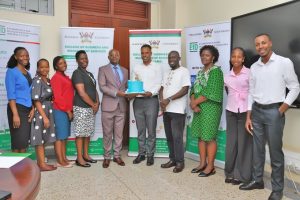



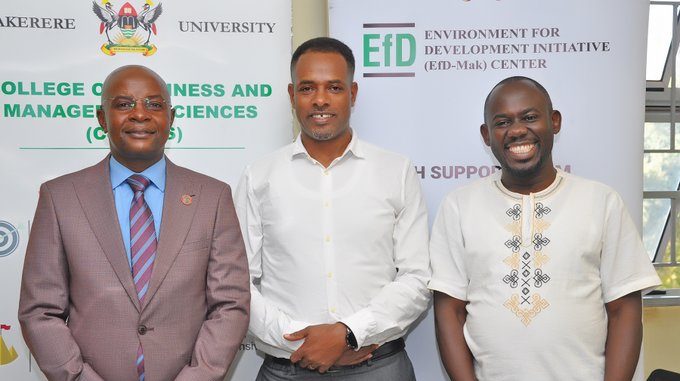
KAMPALA — Makerere University has called for stronger and more structured postdoctoral programmes to build research capacity, increase scholarly productivity and deepen collaboration between Ugandan researchers and institutions abroad.
The call was made by Prof. Edward Bbaale, Principal of the College of Business and Management Sciences (CoBAMS) and Director, Environment for Development Initiative (EfD at Makerere), during a farewell ceremony for Dr Gemeda Olani Akuma, who has completed a postdoctoral fellowship at Makerere after spending more than a year at the institution.
Dr Gemeda was based at CoBAMS from July 2025 to September 2026, where he conducted research, participated in policy engagements and supported graduate students.
Prof. Bbaale said Makerere should use the experience gained from programmes such as Dr Gemeda’s fellowship to improve its institutional framework and encourage more academic units to host postdoctoral researchers.
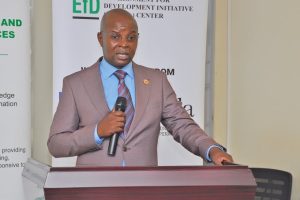
“As we try to streamline the postdoctoral programme at the policy level and encourage all academic units to participate, there is great potential,” he said.
He added that postdoctoral researchers can contribute not only through publications but also by expanding academic networks, mentoring younger researchers and creating opportunities for international collaboration.
Dr Peter Babyenda, a lecturer in the Department of Policy and Development Economics at Makerere University, said Dr Gemeda had made significant contributions to research and policy engagement during his fellowship.
Babyenda said the fellow worked particularly on research related to water systems and ecosystem services in Uganda and participated in engagements with government institutions.
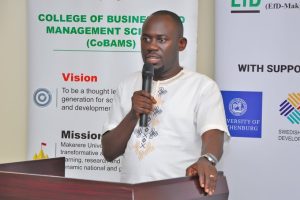
“First, he has been a postdoctoral fellow and has been actively involved in conducting research. He has contributed significantly to advancing research, particularly in the area of water systems and ecosystem services in Uganda,” Babyenda said.
He said Dr Gemeda had interacted with stakeholders including the National Environment Management Authority (NEMA), the Ministry of Water and Environment and the National Planning Authority.
According to Babyenda, the engagements included about three policy workshops aimed at connecting research findings with policy discussions.
He also praised Dr Gemeda for supporting graduate students pursuing research at Makerere, particularly those undertaking master’s and doctoral studies.
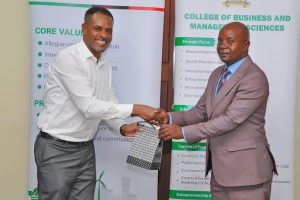
“For us as colleagues, we are proud of him because of his contribution in three major areas,” Babyenda said. “First, he has contributed to advancing knowledge through research. Second, he has interacted with policymakers and contributed to policy engagement. Third, he has supported our graduate students who are conducting research.”
Dr Gemeda described his fellowship as a productive period that provided him with research experience, international exposure and opportunities to build professional networks.
He said his initial objective was to learn, interact with researchers from different backgrounds and expand his academic experience.
“Actually, I came here to learn. That was my main intention—to gain exposure to the international academic community, interact with other scholars and expand my understanding and experience,” he said.
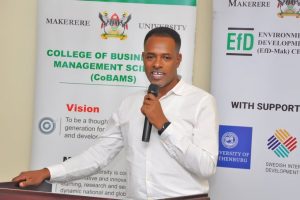
Dr Gemeda said the fellowship had produced tangible research results, including two papers that were submitted to reputable journals. “It has been a very productive period. During this time, we produced two papers, and both have been submitted to reputable journals,” he said.
He said both papers had undergone revision and been resubmitted, expressing hope that they would soon be published.
Beyond academic work, Dr Gemeda praised the support he received from staff and researchers at Makerere. “People here at the Centre, as well as Makerere University in general, they are very kind, very supportive, they made me feel at home,” he said.
He said the relationships developed during the fellowship would continue beyond his physical stay at Makerere. “I promise to be an ambassador for the Centre and the university and to speak positively about my experience wherever I go,” Dr Gemeda said.
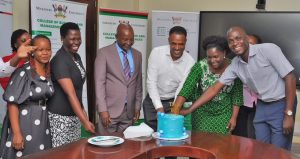
Dr Gemeda said he hoped the academic relationships developed during his stay would lead to further joint research, conferences and other collaborations.
Building professional networks
Prof. Bbaale also urged researchers to build professional networks alongside producing high-quality research, warning that good ideas can struggle to reach wider audiences without collaboration.
“You may have good ideas. The scientific work may be excellent. But you may not be able to submit or advance those ideas because you do not have the necessary networks,” he said.
He encouraged Dr Gemeda to maintain his links with Makerere and the EFMC, saying the Centre would remain open to future collaboration.
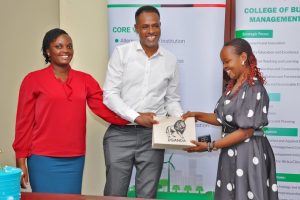
“We are very happy to continue working with you and to build on what we have been doing, even when you are no longer physically here,” Prof. Bbaale said.
He also advised young economists and researchers to remain committed to their work, saying meaningful academic achievements require time and sustained effort.
“If you want to be successful as an economist, there is no shortcut,” he said. “If you want to produce meaningful work, you have to give it time. You have to give it commitment. You have to give it your best effort.”

Prof. Bbaale said the fellowship demonstrated the value of creating opportunities for researchers to work across institutions and countries.
“Significant research requires you to live with the work that you are doing. You have to sit down, think, develop ideas and work through them,” he said.
The fellowship was supported through collaboration involving the University of Cape Town, according to Babyenda and Dr Gemeda.