


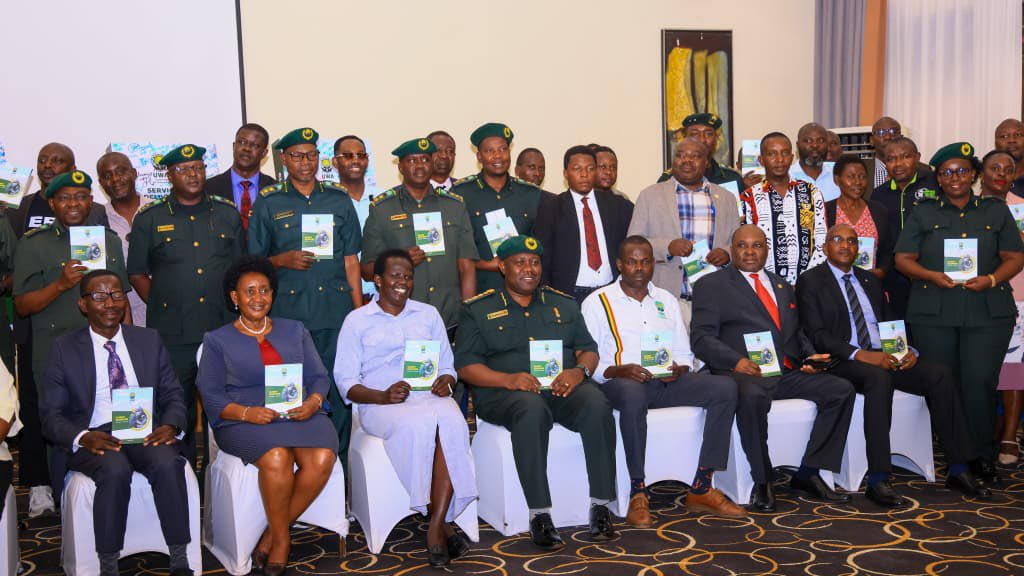
The Uganda Wildlife Authority (UWA) has unveiled an ambitious Strategic Plan for 2026–2030, alongside new Service Delivery Standards and a Client Charter, signalling a renewed commitment to conservation excellence, tourism growth and citizen-centred service delivery.
Speaking at the launch, UWA Executive Director Dr James Musinguzi described the three documents as a comprehensive framework that will guide the Authority’s operations over the next five years. He noted that the plan reflects UWA’s commitment to accountability, efficiency and improved service delivery to stakeholders.
“These documents embody our commitment to demonstrate that we are organised, accountable and ready to deliver on our mandate with clear standards,” Musinguzi said.
He highlighted ongoing reforms within the Authority, including the adoption of digital systems such as EarthRanger technology for real-time wildlife monitoring, the use of drones and aircraft for surveillance, and the automation of all payments to enhance transparency and efficiency.
UWA also showcased key conservation milestones, including the first reintroduction of rhinos in the wild in decades. Once declared extinct in Uganda in 1983, rhinos have now been successfully bred and reintroduced into Ajai Wildlife Reserve and Kidepo Valley National Park, marking a historic step in restoring Uganda’s biodiversity.
The Strategic Plan outlines major priorities including ecosystem restoration, investment in technology to combat wildlife crime, human resource development, and diversification of tourism products.
Over the next five years, UWA targets clearing at least 5,000 hectares of invasive plant species, expanding wildlife populations through translocations, and developing new tourism experiences such as water-based tourism, among others.
Representing the Permanent Secretary, Ministry of Tourism, the Under Secretary, Geoffrey Sseremba, emphasised the importance of the plan in strengthening Uganda’s position as a leading tourism destination.
The Ministry underscored that UWA plays a central role in safeguarding biodiversity while supporting tourism, a key driver of economic growth and socio-economic transformation.
“The success of these documents will be measured by the results they deliver and the confidence they inspire among the people we serve,” He said, adding that the plan is expected to improve operational efficiency, strengthen accountability and enhance service delivery to tourists, researchers, investors and communities.
Jane Kyarisiima Mwesiga, the Deputy Head of Public Service, stressed the need for public institutions to focus on creating measurable value for citizens. She described the Strategic Plan, Client Charter and Service Delivery Standards as critical tools for driving performance and accountability in the public sector.
“Public institutions exist to create value for citizens. The real test of this plan will be in its implementation and the tangible outcomes it delivers,” she said.
She added that the Client Charter and Service Delivery Standards represent a social contract between UWA and the public, reinforcing transparency, responsiveness and citizen-centred service delivery.
With increased investment in ranger training, infrastructure development and scientific research, including the establishment of a DNA forensic laboratory, UWA is positioning itself to tackle emerging conservation challenges while enhancing visitor experiences.