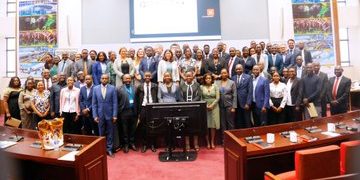



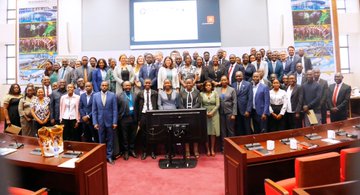
The Ministry of Finance, Planning and Economic Development has convened a high-level forum with development partners and financiers to strengthen Uganda’s capacity to mobilise climate finance and attract investment for green development projects.
The forum showcased a pipeline of climate finance project concepts developed under the GIZ-supported Climate Finance Project Development Initiative and was organised in collaboration with the Ministry of Energy and Mineral Development (MEMD) and the Ministry of Agriculture, Animal Industry and Fisheries (MAAIF).
Speaking at the opening of the forum, Ms Maris Wanyera, the Acting Director for Debt and Cash Policy at the Ministry of Finance, said Uganda is putting in place the systems needed to unlock more climate financing.
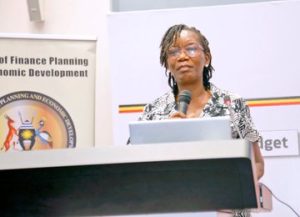
“Uganda is actively building the systems needed to mobilise greater climate finance,” Ms Wanyera said, noting that the country is strengthening its ability to develop investment-ready projects that can attract support from development partners and international financiers.
Representing the Permanent Secretary of the Ministry of Energy and Mineral Development, Dr Brian Isabirye said Uganda is shifting from implementing isolated climate projects to developing a pipeline of bankable investments.
“Uganda is moving from isolated projects to a pipeline of bankable investments. Engagement with financiers and development partners helps in refining investment concepts and improves Uganda’s chances of accessing green and other forms of climate finance,” Dr Isabirye said.
During the forum, officials from MEMD and MAAIF presented project concepts covering renewable energy, energy efficiency, climate resilience, sustainable agriculture, methane emission reduction and sustainable mining.
The projects were developed through a practical “learn-by-doing” training programme facilitated by Stantec Consulting under the Climate Finance Project Development Initiative.
Development partners and financiers provided technical feedback on the proposed projects, identifying potential sources of funding and recommending next steps to strengthen the investment proposals.
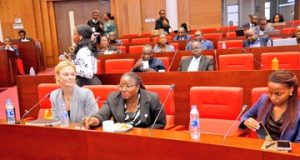
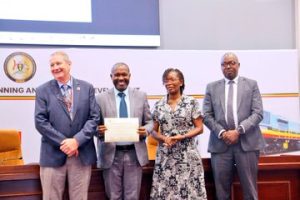
The event also recognised efforts to build government capacity in climate finance. A total of 67 officers from the Ministry of Finance, MEMD and MAAIF received certificates after completing basic, intermediate and advanced training in climate finance project design.
According to the Ministry of Finance, the certification marks a significant step in strengthening institutional capacity within government ministries to prepare high-quality, investment-ready climate projects capable of attracting international climate finance.
The government says developing a strong pipeline of bankable climate projects is critical to supporting Uganda’s transition to a low-carbon, climate-resilient economy while advancing sustainable economic growth.