


Health experts are calling for deeper collaboration between government and private health facilities to curb Uganda’s growing cancer burden, warning that limited awareness and late diagnoses are costing thousands of lives each year.
Dr Deogratius Ssenkumba, a medical officer at Aga Khan University Specialty Centre in Kampala, said no single institution can tackle the crisis alone.
“Cancer remains a major health burden in the country. Every year, approximately 35,000 new cases are recorded, and this requires stronger collaboration to manage effectively,” Dr Ssenkumba said.
The Uganda Cancer Institute estimates 34,008 new cases and 22,992 cancer-related deaths occur annually. About 25,000 people die from cancer each year, meaning 70,000 to 80,000 Ugandans are actively receiving cancer care at any given time. Most patients present at stage 3 or 4, when treatment focuses on managing symptoms and palliative care rather than cure.
“Early detection is a major challenge. But if cancer is detected at stage 1 or 2, it can be cured. That is why screening and early diagnosis are very important,” Dr. Ssenkumba said.
Prevention and partnerships key to progress
Dr. Ssenkumba highlighted cervical cancer as one area where Uganda can make rapid gains. The government now offers a single-dose HPV vaccine targeting children before they become sexually active.
“The good thing is that nowadays the government has a single-dose vaccine, so one shot can prevent cervical cancer,” he said.
He also pointed to lifestyle-related cancers, noting that obesity and poor diet contribute to increased risk, while preventive health practices can reduce cases. Other cancers, like Kaposi’s sarcoma, are closely linked to HIV, making HIV treatment and prevention critical to reducing incidence.
To expand access, Aga Khan conducts health education outreaches, runs a cancer unit, and provides screening and treatment services. The facility is now expanding its capacity with a new hospital in Kampala, expected to open around 2028.
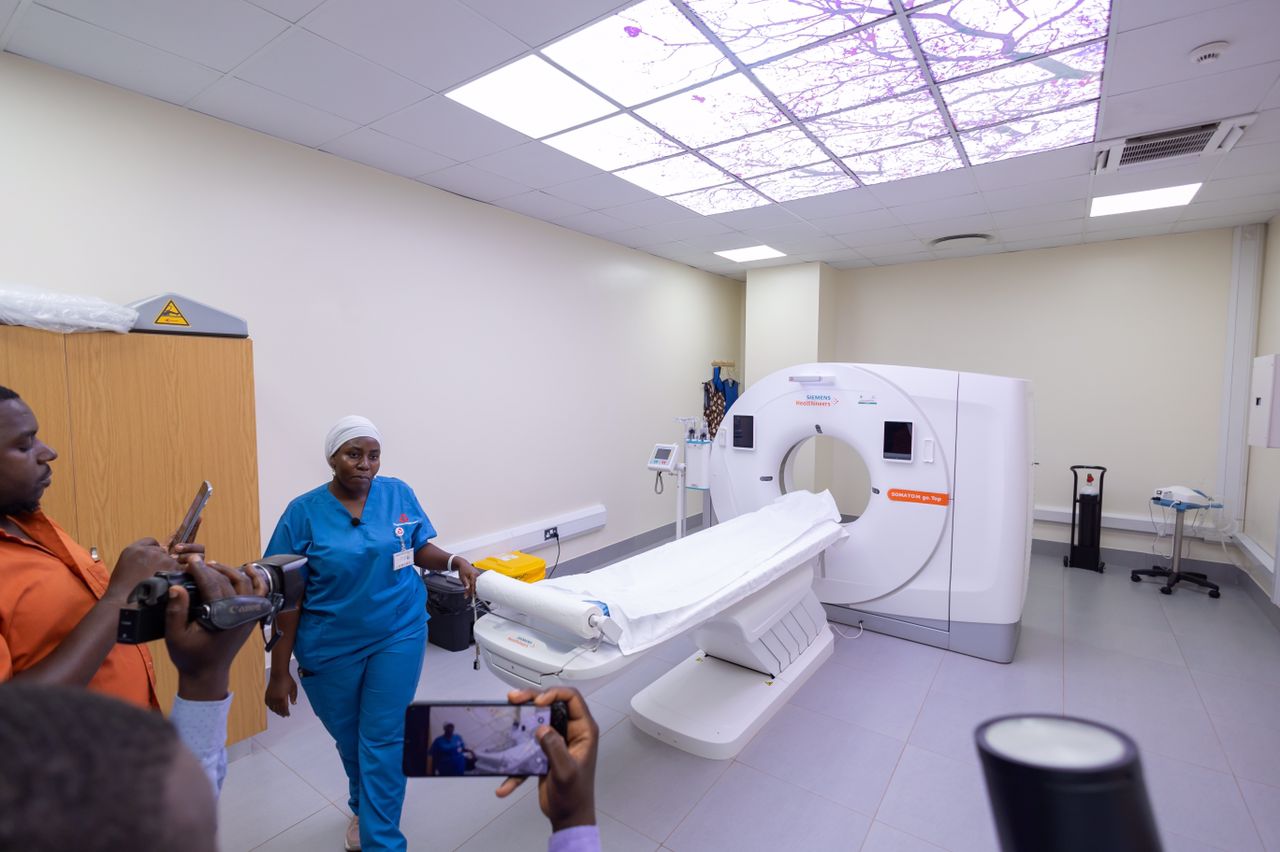
The facility will offer chemotherapy, dialysis, and advanced diagnostic imaging, including PET-CT scanners.
“While basic cancer diagnosis and chemotherapy services are currently available, more advanced treatment options, including radiotherapy, are still limited locally, and many patients travel abroad for such services. At Aga Khan, we will plug this gap to ensure these services are provided locally,” Dr. Ssenkumba said.
Dr. Ssenkumba stressed that awareness campaigns help correct the misconception that cancer is always fatal. “If most children are vaccinated, cervical cancer could be eliminated. Awareness helps people understand that cancer can be treated if detected early.”
He urged the public, media, and private sector to work with government institutions to expand screening, public education, and treatment access.