


President Yoweri Kaguta Museveni has outlined ten strategic priorities aimed at expanding Uganda’s economy tenfold, calling on leaders to prioritise wealth creation, value addition and practical solutions to national challenges.
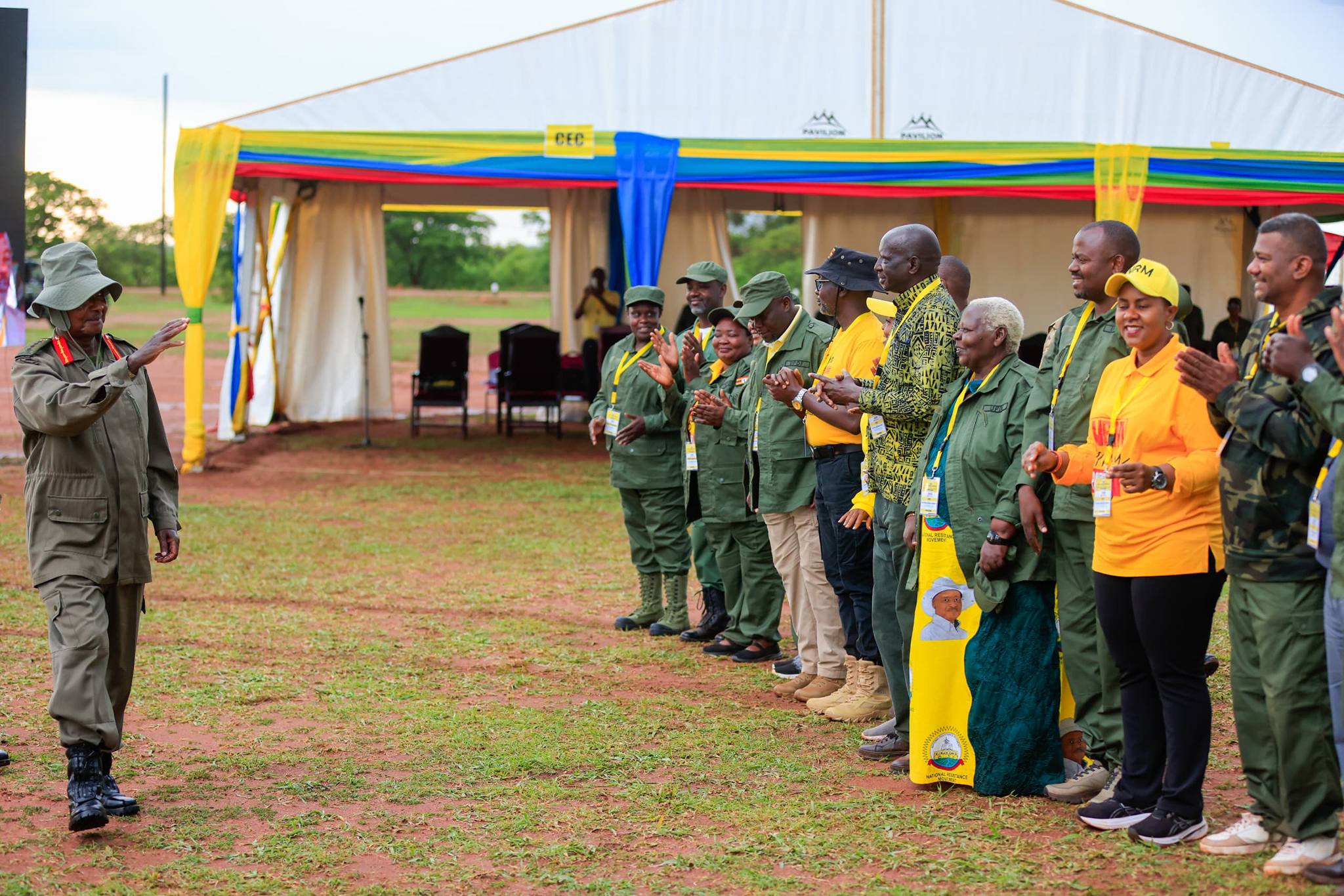
The President made the remarks during a retreat for newly elected Members of Parliament and party-leaning independents at the National Leadership Institute (NALI) in Kyankwanzi.
Addressing legislators, Museveni said the priorities are anchored in the Fourth National Development Plan (NDP IV) and are intended to drive Uganda’s transformation into a modern and productive economy. “To achieve the NDPIV objectives, the government will prioritise strategic interventions that expand the economy and improve livelihoods,” President Museveni said.
The discussions followed technical presentations from officials of the National Planning Authority, including Executive Chairperson Dr Pamela Mbabazi and Executive Director Dr Joseph Muvawala.
The President stressed that commercial agriculture and value addition remain central to economic growth, urging Uganda to move away from exporting raw commodities. “If we add value to products like coffee—through roasting, grinding and packaging—we can earn much more compared to exporting it in raw form,” he explained.
He also highlighted ongoing government efforts to monetise the economy through programmes such as the Parish Development Model (PDM) and Emyooga, aimed at integrating more citizens into income-generating activities.
Museveni emphasised the need to strengthen the knowledge economy through investment in science, technology and innovation. “We must invest in science and technology, including producing vaccines, automobiles and electronics,” he said.
On infrastructure, the President pointed to planned investments in high-speed rail, the metre gauge railway, energy systems, industrial parks and export processing zones as key enablers of industrialisation.
He further underscored the role of financial institutions such as the Uganda Development Bank and Uganda Development Corporation in reducing the cost of borrowing and supporting strategic sectors.
On social services, Museveni called for expanded access to education and healthcare through cost-effective interventions. “We must ensure every parish has a primary school and every sub-county has a secondary school, while strengthening preventive healthcare,” he said.
He also highlighted emerging priority areas, including the creative industry, preparations for the African Cup of Nations (AFCON), and infrastructure development within the Greater Kampala Metropolitan Area.
Addressing urban challenges, Museveni acknowledged traffic congestion in the capital but assured that solutions are underway. “Traffic jams in Kampala require significant investment, but we shall solve them,” he said, while also warning that corruption must be decisively addressed.
Senior Presidential Advisor on Political Mobilisation, Moses Byaruhanga, who presented a paper on mobilisation and service delivery, urged leaders to adopt a problem-solving approach. “Leaders must diagnose societal challenges and provide solutions, just like a doctor treats a patient,” Byaruhanga said.
He further encouraged Members of Parliament to remain focused on identifying and addressing community needs. “As leaders, you must understand the problems affecting society and work towards providing solutions,” he added.
The retreat continues as the government seeks to align legislative priorities with its long-term economic transformation agenda.