


WASHINGTON — Astronauts aboard NASA’s Artemis II mission have set a new record for the farthest distance humans have ever travelled from Earth, marking a major milestone in modern space exploration.
According to NASA, the four-member crew reached a maximum distance of approximately 252,756 miles (406,800 kilometres) from Earth on April 6 during their historic journey around the Moon. This surpasses the previous record of 248,655 miles set in 1970 by astronauts aboard the Apollo 13.
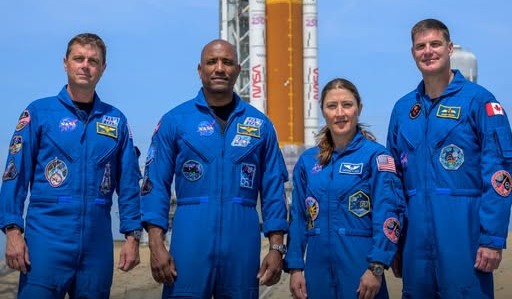
The Artemis II mission, launched on April 1 from Kennedy Space Centre, is carrying Commander Reid Wiseman, pilot Victor Glover, mission specialist Christina Koch, and Canadian astronaut Jeremy Hansen. The crew is conducting a free-return flyby of the Moon, a trajectory that allows the spacecraft to loop around the lunar surface and return safely to Earth without requiring additional propulsion.
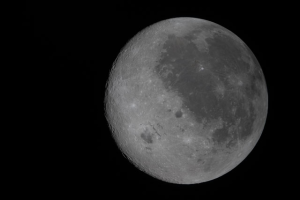
During the mission, astronauts carried out system tests critical for future lunar landings under NASA’s Artemis program, while also capturing images of both the near and far sides of the Moon, as well as a rare view of a solar eclipse from space.
In a message shared before a scheduled communications blackout, Glover reflected on values of unity and compassion, while the crew later emphasised teamwork, saying, “We will always choose each other.”
NASA leadership hailed the achievement as a defining moment. Agency officials said the mission demonstrates the capability to push the boundaries of human spaceflight as preparations continue for future missions aimed at returning astronauts to the lunar surface.
The Artemis II spacecraft is now on its return journey to Earth and is expected to conclude the mission with a splashdown in the Pacific Ocean.
The Artemis program is seen as a cornerstone of renewed global efforts in space exploration, with ambitions extending beyond the Moon to eventual human missions to Mars.