


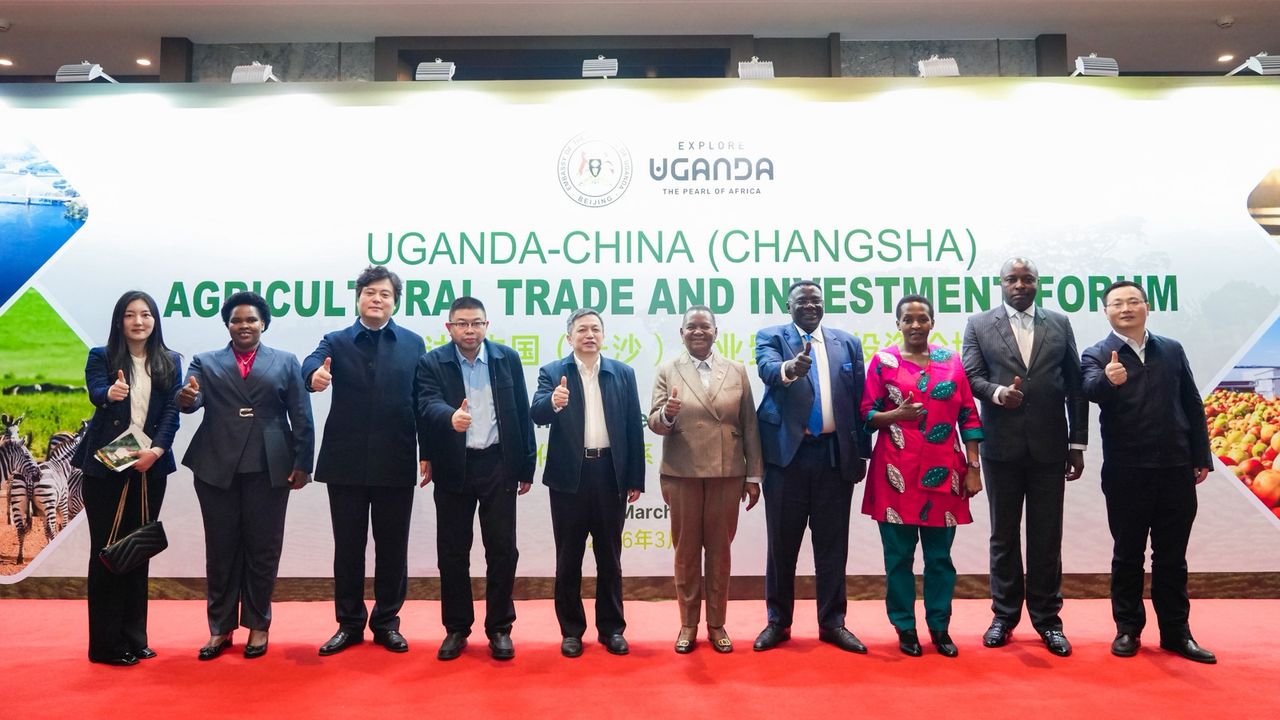
CHANGSHA, China —The Uganda Embassy in Beijing has catalysed a new era of trade cooperation by convening the Uganda–China (Changsha) Agricultural Trade and Investment Forum, aimed at transforming long-standing diplomatic ties into tangible investment in agro-industrialisation and value addition.
The high-level event, held on March 19, 2026, under the theme “Cultivating Partnerships for Prosperity,” brought together government officials, investors, business leaders, and development partners from both Uganda and China to explore investment opportunities in agriculture, agro-industrialisation, and value addition.
Uganda’s Ambassador to China, H.E Oliver Wonekha, opened the forum by emphasising the importance of translating diplomatic relations into practical economic outcomes.
“Uganda and China share a long-standing partnership built on mutual respect, solidarity, and a shared vision for development through South–South cooperation,” Wonekha said. “Under the visionary leadership of H.E. President Yoweri Kaguta Museveni and H.E. President Xi Jinping, this relationship has grown significantly through strategic frameworks such as the Belt and Road Initiative and the Forum on China–Africa Cooperation.”
She highlighted China’s zero-tariff policy on a wide range of African exports as a key opportunity. “This development presents a significant opportunity for Ugandan producers and exporters to access the Chinese market more competitively, boost export volumes, and move up the value chain through agro-processing and value addition,” Wonekha said.
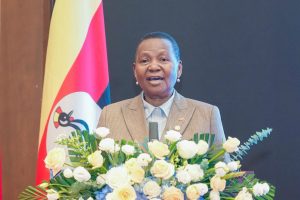
Ambassador Wonekha outlined Uganda’s national development priorities, saying, “At the centre of this strategy is the ATMS framework — Agro-Industrialisation, Tourism Development, Mineral Development, and Science, Technology and Innovation. Agriculture remains the backbone of Uganda’s economy, employing the majority of our population and offering immense opportunities for value addition, agro-processing, mechanisation, logistics, and agribusiness partnerships.”
Amb. Henry Mayega, Head of International Economic Cooperation at the Ministry of Foreign Affairs, emphasised Uganda’s investment potential. “Uganda comes to Changsha with a simple message. We are stable, reforming, and open for partnerships built on industrialisation, technology transfer, and trade facilitation,” he said.
“Our youthful workforce, expanding manufacturing base, and vast agricultural potential make us a long-term partner for Chinese firms looking at the East African Community and AfCFTA markets, which together represent over a billion consumers and are still growing.”
Mayega highlighted the underutilised agricultural land in Uganda as a major opportunity. “We have 80 percent arable land, but only a third is cultivated. That gap is an opportunity: modern inputs, irrigation, seed systems, agro-processing, and logistics that move us from subsistence to shipped products,” he said.
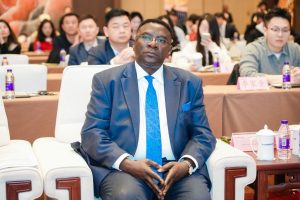
The Head of International Economic Cooperation also outlined incentives for investors. “The Uganda Investment Authority runs a One-Stop Centre. We offer long tax holidays for qualifying projects, VAT relief on machinery and seeds, and strong protections for foreign capital. In short, when you set up processing or manufacturing in Uganda, you can serve regional markets competitively,” he said.
Paul Mwambu, the Commissioner of Crop Inspection and Certification at the Ministry of Agriculture, Animal Industry and Fisheries (MAAIF), presented Uganda’s agricultural potential and identified strategic areas for collaboration with China.
“Uganda and China enjoy a long history of friendship and growing cooperation. Today, that cooperation must deepen further in agriculture — the sector that remains the backbone of Uganda’s economy. Agriculture employs over two-thirds of our workforce and contributes significantly to GDP,” Mwambu said.
He outlined five priority areas for partnership: trade, agro-processing and value addition, technology transfer and innovation, livestock and fisheries modernisation, and financing and infrastructure. “We invite Chinese buyers, importers and processors to establish stable offtake agreements and long-term partnerships that guarantee predictable markets and fair returns for our farmers while ensuring reliable supply for Chinese consumers and processors,” he said.
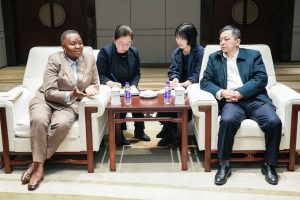
Mwambu emphasised value addition and technology transfer. “Exporting raw commodities limits the value we capture. Co-investing in processing, cold chains, and packaging facilities on Ugandan soil will create jobs, increase incomes, and build brands that fetch higher prices. We seek collaborative programs for demonstration farms, training centres, and applied research tailored to Uganda’s agro-ecological zones,” he said.
On livestock and fisheries, Mwambu added, “Investments in animal health systems, feed production, processing facilities, and cold-chain logistics will reduce losses and boost exports. We welcome Chinese firms with expertise in veterinary services, aquaculture technologies, and mechanised processing to partner in raising productivity and meeting international sanitary requirements.”
He also stressed the need for inclusive finance and infrastructure. “Blended finance, concessional credit lines, crop and livestock insurance, and public–private partnerships can de-risk investments and unlock capital. Investments in rural roads, storage, electricity, and digital connectivity are essential to deliver products from farm to market efficiently,” Mwambu said.
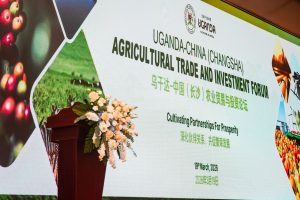
The Forum included high-level attendees from the Hunan Provincial Government, the China–Africa Economic and Trade Expo Secretariat, Ugandan government ministries, and private sector investors. It is expected to facilitate business-to-business engagements, advance bankable projects, and strengthen institutional coordination between Uganda and Hunan Province.
“Let us move from dialogue to concrete projects, from pledges to implementation, and from partnership to measurable prosperity for our peoples,” Mwambu concluded.
The Uganda Embassy emphasised that the Forum marked a decisive step in transforming Uganda–China relations into tangible economic outcomes, leveraging technology, investment, and market access to drive industrialisation, job creation, and shared prosperity.