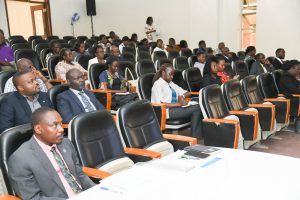



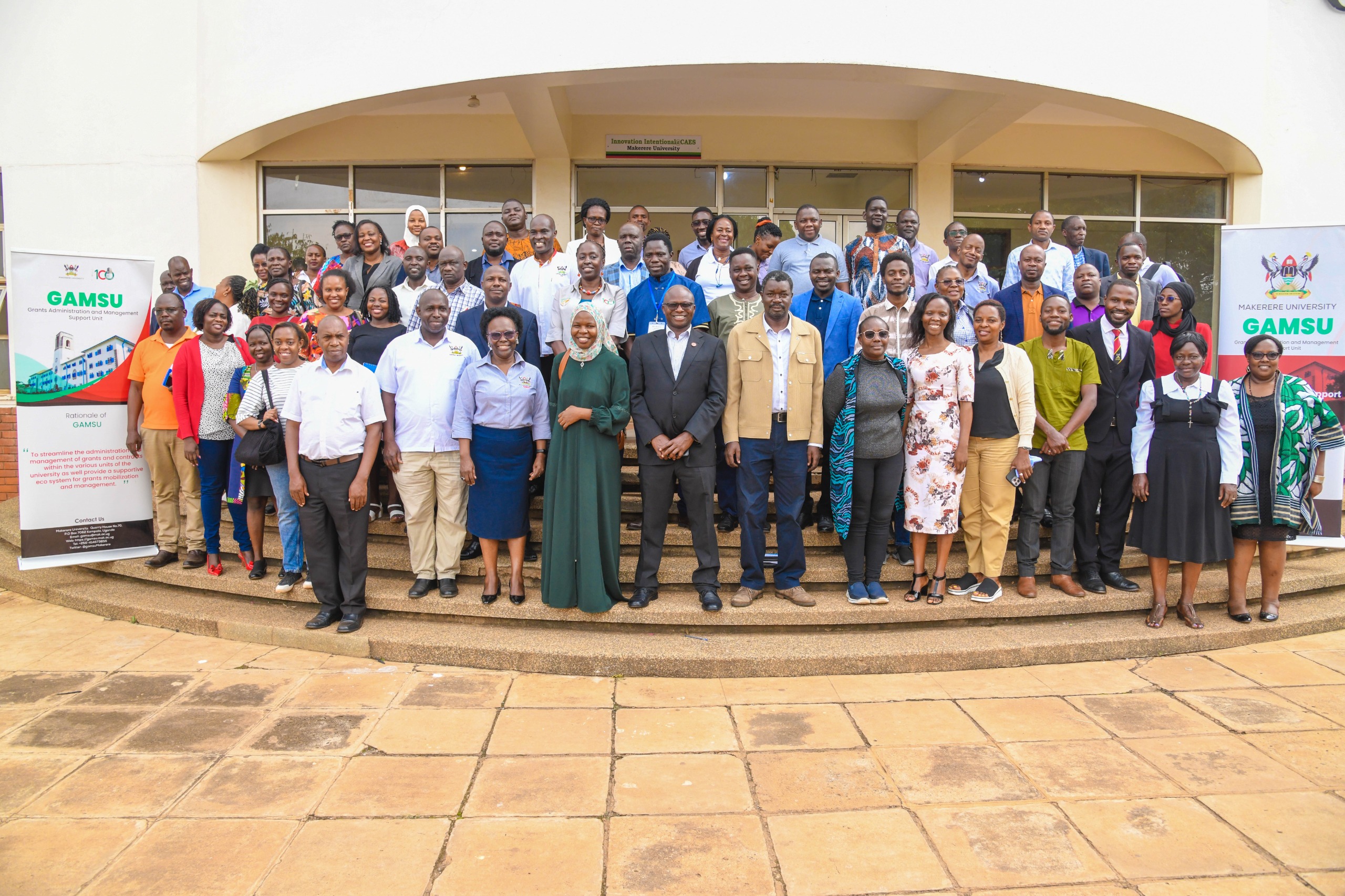
Kampala – Makerere University has developed an integrated electronic pre-award grants management system aimed at improving transparency, coordination, and efficiency in research funding applications.
University leaders said the system will help researchers access diverse funding opportunities, strengthen collaborative proposal development, and enhance institutional competitiveness in securing both international and local research grants.
Addressing challenges in grant management
Professor Sylvia Antonia Nakimera Nannyonga-Tamusuza, the Head of the Grants Administration and Management Support Unit (GAMSU), said researchers have faced several challenges, including rising competition for international research funding, fragmented awareness of grant opportunities, limited institutional coordination, capacity gaps in grant development, and overreliance on manual processes.

“The main goal is to improve Makerere University’s grant success rate by strengthening pre-award support, promoting transparency, and enhancing efficiency,” the GAMSU head said.
Professor Nannyonga-Tamusuza explained that the system will support researchers even before proposal writing begins. “Understanding the funder’s requirements is critical. If a researcher does not clearly understand what the funder is asking for, even a well-written proposal may not secure funding,” she said.
She added that the system will help provide essential documents required by principal investigators when applying for grants. “Different funders require different supporting materials, including audit reports and institutional records. Centralising information will make it easier for researchers to access what they need,” she noted.
However, Professor Nannyonga-Tamusuza clarified that the system does not eliminate individual grant applications. “We are not saying researchers will no longer apply individually. GAMSU provides support to help our staff compete favourably in the research community,” she said.
She emphasised that researchers operate at different career levels, noting that early-career academics may need guidance in grant proposal development. “Our role is to provide support when needed, and that support will be accessible through the system,” she added.
Strengthening institutional research strategy
Prof. Robert Wamala, the Director of Research, Innovation and Partnerships (DRIP), said the university’s research agenda is guided by a 10-year strategic plan aligned with national development priorities.

“The university is building a sustainable, research-led institution that produces a highly productive academic workforce and versatile graduates,” he said.
He explained that the research agenda provides a roadmap for prioritising research, guiding funding decisions, and promoting collaboration across faculties and research centres.
Makerere University has identified nine priority research themes for the next five years, including health systems, sustainable urbanisation, governance and social equity, agricultural transformation, education, economic growth, climate change, cultural heritage, and science and technology.
Each theme contains sub-themes that researchers are encouraged to align with institutional research directions. He urged staff to familiarise themselves with university policies, which are available on the official website.

Partnerships and research infrastructure
University officials highlighted the importance of international collaboration in research funding. Makerere University maintains partnerships with several global and regional institutions, including consortium networks and private research organisations.
Most partnerships are with universities and private institutions and contribute to research funding opportunities. The university also has research support infrastructure, including laboratories, intellectual property management services, research ethics committees, and grants administration support.
The pre-award system will also provide guidance templates, collaborative proposal tools, and real-time dashboards for monitoring submissions and feedback.
Institutional coordination and compliance
The University Secretary, Mr Yusuf Kiranda, emphasised that research funds are managed on behalf of Makerere University and the Government of Uganda.

He urged principal investigators and research teams to maintain transparency and accountability in managing grant resources. “Funds acquired through grants must be accounted for within stipulated timelines and must demonstrate value for money,” he said.
He also encouraged adherence to university policies, including human resource recruitment guidelines, when appointing project staff. The University Secretary further requested that all grants managed by different university units be registered with GAMSU.
Supporting researchers through institutional systems
Prof. Julius Kikoma, Director of Graduate Training, said the electronic grants system represents a cultural shift in research administration.
He noted that earlier academic practice required researchers to independently search for funding opportunities and manage grants without institutional support.
“While that approach sometimes produced successful researchers, it also resulted in inconsistencies in proposal preparation and accountability reporting,” he said.
He highlighted the importance of institutional support in meeting evolving donor compliance standards.
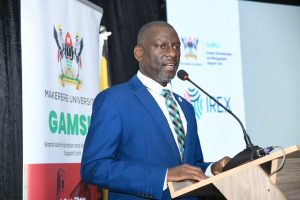
He added that grant writing involves two equally important components — scientific proposal quality and institutional compliance support. “About 50 percent depends on scientific and technical proposal strength, while the other 50 percent depends on institutional coordination and compliance management,” he said.
He encouraged researchers to integrate GAMSU into proposal development from the beginning rather than treating it as a final review step.
The dissemination workshop on the electronic pre-award grants management system was officially launched on 6 March 2026.
The project was supported by the International Research and Exchange Board (IREX), funded through the Carnegie Corporation of New York, with additional contributions from Makerere University.
University leaders thanked technical teams, project staff, and workshop participants for supporting the initiative and encouraged continued collaboration to improve the system.