


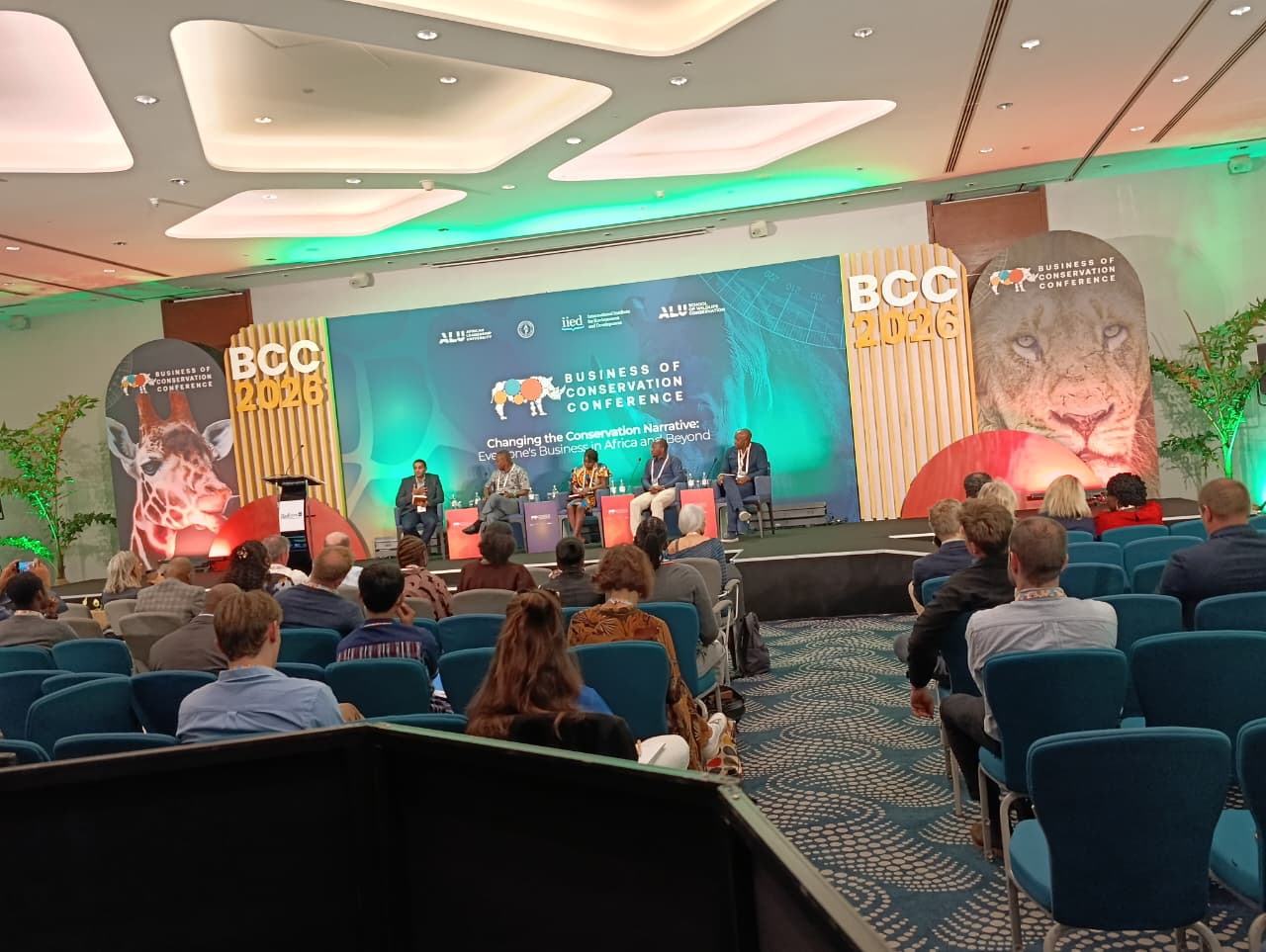
The Business of Conservation Conference 2026 is currently underway in Nairobi, Kenya, bringing together leaders from across Africa and beyond to discuss how conservation can become a sustainable business that benefits both nature and people.
The conference, held from March 4-7 at the Radisson Blu Hotel Nairobi Upper Hill, is organised by the African Leadership University School of Wildlife Conservation. It brings together policymakers, conservation organisations, investors, private sector leaders and community representatives to explore how wildlife and natural ecosystems can generate economic value while protecting biodiversity.
Under the theme “Changing the Economics of Conservation,” the conference focuses on how Africa can build sustainable systems where conservation is not just about protecting nature but also about creating economic opportunities for communities.
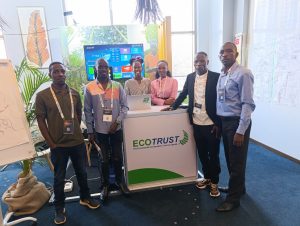
Among the organisations participating is ECOTRUST, a Ugandan conservation organisation that has spent nearly three decades helping smallholder farmers turn conservation into a sustainable and viable investment option. Founded in 1999 as the Environmental Conservation Trust of Uganda, the organisation works in key biodiversity areas of Uganda, including the Albertine Rift and Mount Elgon landscapes, supporting farmers to restore forests, protect biodiversity and improve livelihoods.
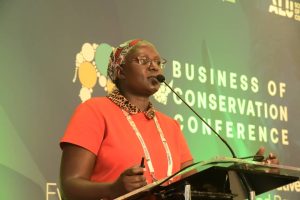
Speaking during an Ignite talk at the conference, Pauline Nantongo, Executive Director at ECOTRUST, shared how innovative financing tools like biodiversity credits can support both conservation and community development.
She explained that conservation efforts often fail to include the communities that live with the natural resources. “Most of the time when we think about these very high science and tech issues, it’s difficult to see how this can be inclusive at a local community level,” Nantongo said.
She compared the situation to someone who improves another person’s house but takes all the benefits. “Can you imagine if somebody comes into your house, paints it and improves its value, then claims the money because they painted it? That is often how monetising conservation works,” she said.
Nantongo explained that ECOTRUST is working to change this by ensuring communities remain owners and active participants in conservation projects.
Using biodiversity credits, a new innovative PES mechanism, ECOTRUST is supporting communities to conserve and protect their forests and other natural resources while also earning income from sustainable businesses such as beekeeping, tree nurseries and other green enterprises. These activities are connected to conservation efforts that improve forest health and wildlife movement corridors.
The approach is also helping address human-wildlife conflict in areas within the Albertine Rift, where animals like chimpanzees move between fragmented forest corridors.
Through community partnerships, ECOTRUST has been mapping wildlife movement routes and restoring forest corridor linkages that allow animals to move safely while reducing conflicts with farmers.
The organisation’s flagship Trees for Global Benefits (TGB) programme has already restored more than 30,000 hectares of land through forestry/agroforestry interventions on private land, linking farmers to the benefits from carbon markets.
According to Nantongo, the goal is to ensure that conservation finance directly supports local livelihoods.
Communities monitor forest health, collect ecological data and participate in decision-making, making them active market actors rather than passive beneficiaries.
The Business Conservation Conference continues to highlight similar solutions from across Africa, focusing on new partnerships, conservation finance and community-led conservation models.
As discussions continue in Nairobi, ECOTRUST’s message remains clear: conservation can only succeed if the people who live closest to nature benefit from protecting it.