


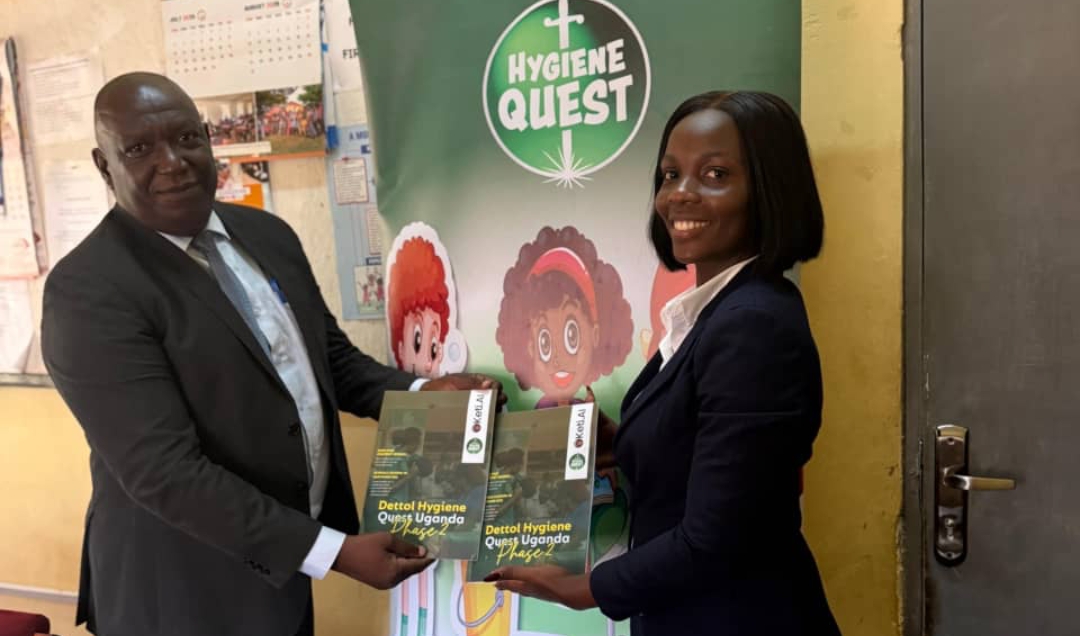
Jinja, Uganda – January 18, 2026 – Dettol Hygiene Quest Uganda, in collaboration with the Jinja District Local Government, has signed a groundbreaking Memorandum of Understanding (MoU) to embed hygiene education permanently into the local school curriculum.
Signed on January 8, 2026, this agreement transitions the initiative from donor-funded support to sustainable local ownership, ensuring lasting impact on child health and school attendance beyond the initial funding from Reckitt.
This strategic partnership adopts a “Sustainability through Integration” model, emphasizing community-led efforts over temporary aid. By incorporating hygiene education into standard educational and health frameworks, the program aims to reduce preventable illnesses, improve attendance rates, and foster lifelong healthy habits among students in Jinja District.
The sustainability framework is built on several foundational elements designed to ensure enduring success. Central to this is the principle of local ownership and accountability, where the Jinja District Local Government has made a formal commitment to integrate and oversee all project activities as integral components of its ongoing educational and public health responsibilities.
This approach shifts the paradigm from external dependency to internal empowerment, allowing the district to manage resources, monitor progress, and adapt strategies based on local needs, thereby guaranteeing that hygiene initiatives become a permanent fixture in the community’s development agenda.
Another key aspect involves empowering educators through the provision of free AI tools, specifically the Dettol Hygiene Quest AI Chatbot, which is made available to teachers at no cost. This innovative digital mentor serves as an on-demand resource, delivering real-time guidance and practical advice on how to seamlessly weave hygiene topics into everyday lesson plans and classroom activities.
By equipping teachers with this accessible technology, the program ensures that instructional quality remains consistently high, even in resource-constrained environments, without imposing any financial burden on schools or educators. This not only enhances teaching effectiveness but also builds capacity among local staff to sustain the program independently over time.
For the first time, the framework introduces sophisticated insights into student absenteeism, enabling schools and district administrators to upload attendance data directly to the AI platform. This process uncovers detailed patterns and identifies the root causes of absences, such as health issues related to poor hygiene practices, over extended periods.
Armed with this data-driven intelligence, educational leaders can implement precise, targeted interventions—ranging from awareness campaigns to infrastructure improvements—that address specific challenges, ultimately leading to higher attendance rates, better academic performance, and improved overall child well-being in the community.
Additionally, the framework enhances district oversight through advanced data analytics, where the local government leverages the free AI platform to systematically track and evaluate learning outcomes. This is achieved by incorporating at least four hygiene-specific questions into every termly examination—conducted at the beginning, middle, and end of each term—and analyzing the resulting scores.

Such monitoring provides actionable insights into the program’s effectiveness, allowing for evidence-based adjustments and continuous improvement. This level of oversight ensures transparency, accountability, and measurable progress in hygiene education, reinforcing the partnership’s goal of long-term health benefits for students.
“By embedding AI-driven tools into the Jinja local government’s operations, we’re not only promoting handwashing but also creating a robust ‘trust layer’ that verifies real-world improvements in attendance and child health,” stated Dr. Shamim Nabuuma Kaliisa, Founder and CEO of Chil AI Lab and Focal Person for Dettol Hygiene Quest Uganda.
“This MoU guarantees that the initiative endures as a vital resource for schools, driven by local commitment and accessible technology available to every educator at no cost.”
The Jinja District Local Government commended the “in-kind” support, which includes handwashing facilities, educational materials for learners, and sophisticated digital tracking systems. These resources equip the community to maintain the program independently, aligning with national priorities for health and education in Uganda.