



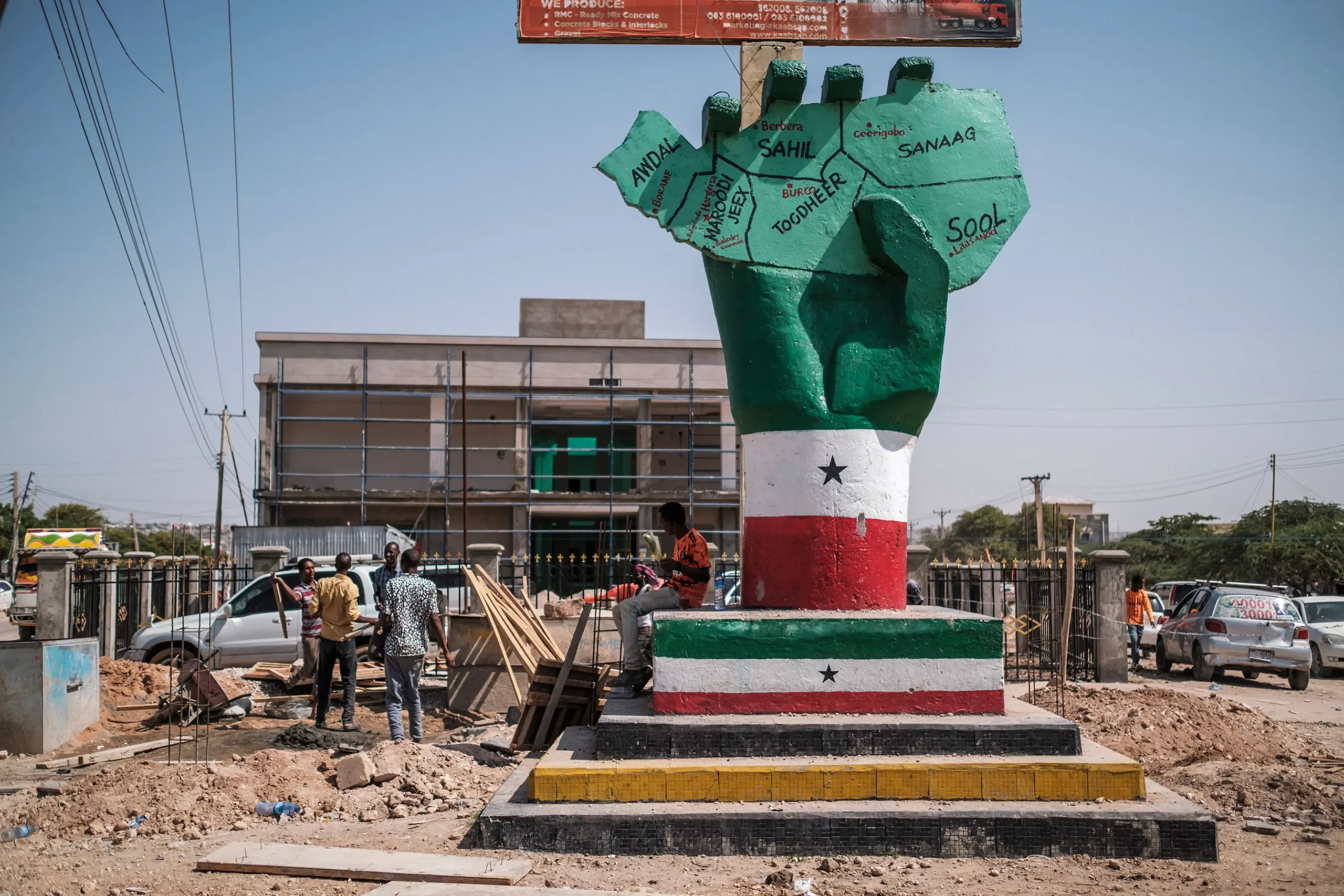
Arusha/ Addis Ababa — The East African Community (EAC) and the African Union (AU) have firmly reaffirmed their recognition of Somalia as a single, sovereign state, rejecting any move to recognise Somaliland as an independent entity amid growing international debate triggered by Israel’s recent decision.
In a statement issued on December 26, the EAC reiterated its unwavering support for the unity and territorial integrity of the Federal Republic of Somalia, emphasising that Somalia remains one sovereign state under the authority of the Federal Government in Mogadishu.
“The East African Community recognises the Federal Republic of Somalia as a single sovereign state under the authority of the Government of the Federal Republic of Somalia,” the regional bloc said.
The EAC noted that its position aligns fully with the African Union’s long-standing principles, as enshrined in the AU Constitutive Act and reinforced by past continental decisions on sovereignty and inherited borders.
“In accordance with the Treaty for the Establishment of the East African Community, the EAC recognises the Federal Republic of Somalia with its borders inherited at independence,” the statement added.
The bloc called on all actors to respect Somalia’s unity and territorial integrity and urged stakeholders to act strictly within established regional and international legal frameworks.
The EAC’s position was echoed strongly by the Chairperson of the African Union Commission, H.E. Mahmoud Ali Youssouf, who expressed “deep concern” over recent developments relating to Somaliland.
“The Chairperson of the Commission unequivocally reaffirms the longstanding and consistent position of the African Union, grounded in the principles enshrined in the Constitutive Act of the African Union,” the AU said in a statement issued from Addis Ababa.
At the core of the AU’s stance is the principle of respect for the intangibility of borders inherited at independence, a doctrine first affirmed by African leaders in 1964 under the Organisation of African Unity (OAU).
The AU Commission Chairperson firmly rejected any initiative aimed at recognising Somaliland as an independent state, stressing that Somaliland remains an integral part of the Federal Republic of Somalia.
“Any attempt to undermine the unity, sovereignty, and territorial integrity of Somalia runs counter to the fundamental principles of the African Union and risks setting a dangerous precedent with far-reaching implications for peace and stability across the continent,” the statement warned.
The AU further reiterated its full support for Somali authorities in their efforts to consolidate peace, strengthen state institutions and advance inclusive governance across the country.
The regional and continental responses come in the wake of Israel’s decision on December 26 to recognise Somaliland, becoming the first country to do so since the territory declared independence from Somalia in 1991.
The move has sparked swift diplomatic pushback. The European Union, through its External Action Service, reaffirmed the importance of respecting Somalia’s unity and territorial integrity, calling the principle “key for the peace and stability of the entire Horn of Africa.”
The EU also encouraged “meaningful dialogue” between Somaliland and the Federal Government of Somalia to resolve long-standing differences.
Similarly, the United States State Department clarified that Washington continues to recognise Somalia’s territorial integrity, explicitly stating that this “includes the territory of Somaliland.” President Donald Trump echoed the position, saying the U.S. had no plans to follow Israel’s lead.
Several countries, including Qatar, Jordan and Algeria, have also rejected Israel’s move. Qatar described it as “a dangerous precedent and a unilateral action that contravenes the principles of international law.”
Somaliland, located along Somalia’s Gulf of Aden coast near the strategic Bab el-Mandeb Strait, has operated as a de facto self-governing entity for more than three decades, maintaining relative stability and holding elections. However, it remains internationally unrecognised, with Somalia insisting on its territorial unity.
For the EAC and AU, the issue goes beyond Somaliland alone. Officials warn that recognising breakaway regions outside established legal frameworks could destabilise Africa’s fragile borders and undermine continental peace and security.
As the debate continues, both regional bodies maintain that Africa’s position on Somalia remains unchanged: unity, sovereignty and territorial integrity remain non-negotiable.