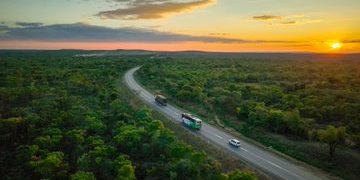



Lusaka — Kiira Motors Corporation has successfully completed the Zambia leg of the Made in Uganda Grand Trans-Africa Electric Expedition, marking a key milestone in the journey into Southern Africa and further validating Africa-built electric mobility across long distances.
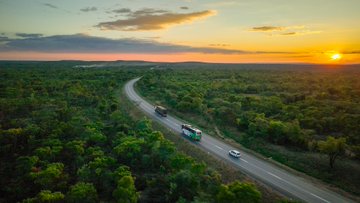
The expedition first entered Zambia through the Nakonde Border between November 26 and 30, 2025, before re-entering on December 18 and completing its final transit on December 22. Over this period, the Kayoola E-Coach covered approximately 1,576 kilometres across varied terrain, including rolling woodlands, open landscapes and urban settings, providing a rigorous test of performance under diverse road and traffic conditions.
According to Kiira Motors, the Zambia stretch demonstrated the electric bus’s resilience, efficiency and operational reliability, while highlighting Zambia’s strategic importance as a regional transport corridor linking East and Southern Africa.
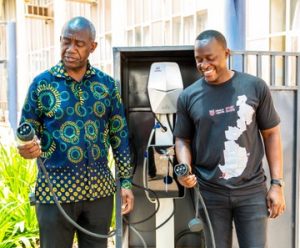
Engagements with partners and stakeholders during the Zambia chapter reinforced the expedition’s broader mission of collaboration and regional integration. Strategic interactions with private-sector players and the MTN Zambia team focused on advancing e-mobility, technology-driven solutions and cross-border cooperation, supported by coordination from MTN Uganda.

A major highlight occurred on December 20, 2025, at East Park Mall in Lusaka, where the “Made in Uganda for Africa” activation brought together government officials, industry leaders and electric-mobility advocates. Discussions centred on accelerating Zambia’s transition to sustainable transport, localising elements of the Kayoola E-Coach supply chain, and aligning research and innovation with market needs.
Senior government officials and stakeholders took test rides aboard the Uganda-manufactured electric bus, describing it as a significant step toward a greener economy. Participants highlighted the potential of electric buses to reduce carbon emissions, lower fuel import bills and support a gradual shift from diesel to electric transport, with prospects for local EV manufacturing in the long term.
The Zambia Electric Mobility and Innovation Alliance (ZEMIA) underscored the economic case for electric mobility, noting that Zambia spends more than US$2 billion annually on fuel imports and that EV adoption could generate substantial national savings.
By the time the expedition exited Zambia on Day 32, it had covered a total of 11,652 kilometres—representing 83.66 per cent of the overall journey. Over this distance, an estimated 5,101.56 kilograms of CO₂ emissions were avoided, with total energy consumption of 9,275.56 kWh, averaging 0.80 kWh per kilometre.
Kiira Motors credited the success of the Zambia leg to the support of the Government of Uganda and President Yoweri Kaguta Museveni, whose vision for industrialisation, technology and sustainability underpins the expedition. The company also acknowledged the Office of the President – Science, Technology and Innovation Secretariat, Uganda’s High Commissions in the region, and key partners, including MTN Uganda and Britam Uganda.
The expedition team expressed gratitude to the people and institutions of Zambia for their hospitality and collaboration, noting that the warm reception reflects growing regional confidence in home-grown African innovation.