


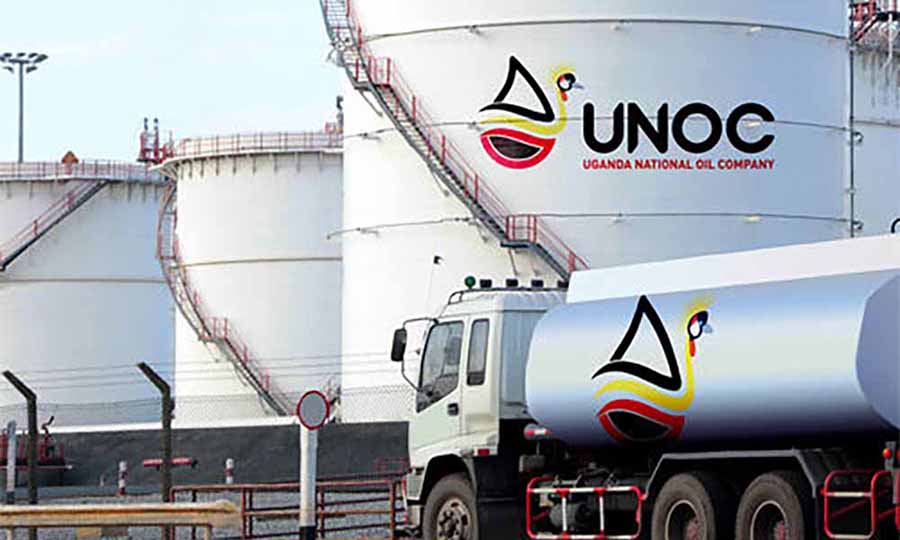
Albertine Graben — Uganda National Oil Company (UNOC) has revealed promising new crude oil prospects (about nine oil wells) in the Butiaba area under the Kasurubani Block, potentially expanding the country’s oil potential across Buliisa, Hoima, and Masindi districts.
Preliminary geological surveys indicate encouraging signs, prompting further studies to determine the actual quantity and commercial viability of these discoveries.
“These potential resources are located within the proven Albertine Graben petroleum province, which allows us to leverage existing and upcoming infrastructure projects such as Tilenga and Kingfisher,” UNOC said in a November 26 statement. “If confirmed, these prospects could reduce future development costs and unlock substantial value for the country.”
The Kasurubani Block represents one of several strategic exploration areas in Uganda’s oil-rich Albertine Graben, a region that has been the focus of upstream development over the past two decades. The government has licensed key players—including TotalEnergies Uganda, CNOOC Uganda, and UNOC itself—to lead upstream activities, while the East African Crude Oil Pipeline (EACOP) is set to transport Uganda’s crude over 1,443 kilometres to the Tanzanian port of Tanga for international export.
UNOC’s Head of Corporate Relations, Sarah Banage, emphasised that beyond exploration and commercial interests, building local capacity is central to the company’s mandate.

Speaking to NTV Uganda, Banage explained, “UNOC does not only oversee the government’s commercial interests; we are also mandated to build capacity within the sector. Because it is a relatively new industry, we need to ensure that Ugandans are equipped to run the sector even after the highly experienced companies eventually leave.”
Banage elaborated on the concept of National Content—a deliberate policy to ensure Ugandans benefit directly from oil and gas activities. “When you hear us talk about how many Ugandans are employed, that is deliberate. Local goods and services, like tomatoes supplied to the sector, are intentionally procured. This ensures that knowledge, skills, and economic value remain in the country,” she said.
She warned that countries with oil resources often fail to benefit their citizens when National Content policies are weak. “If a country fails to retain value from its natural resources, it is a sign of weak National Content policies. Strong laws and frameworks ensure that knowledge is transferred and that local people ultimately run the sector.”
The oil sector has attracted significant investment. By June 2025, Uganda had secured US$11.11 billion—US$7.8 billion for developing oil fields and US$3.3 billion for EACOP. An additional US$4 billion is expected between 2025 and 2027 as Uganda moves toward first oil and completes major infrastructure projects.
Flagship Projects
UNOC CEO Proscovia Nabbanja provided a detailed update on the country’s flagship projects while appearing on NBS TV.

Tilenga Project: Out of 420 planned wells, 152 have been drilled, with all 145 wells required for first oil completed. Site preparation, access roads, and well pads are 76.5% complete, while the Early Production and Support Construction Component (EPSCC) stands at 66% against a planned 69%. Overall project completion is 57.2%, with first oil targeted for July 2026.
Kingfisher Project: Fifteen wells have been drilled, exceeding the 11 required for first oil, achieving 100% completion for that milestone. Overall project progress stands at 73.5%.
Kasurubani Block: The Production Sharing Agreement (PSA) was signed in February 2023. Phase 1, covering seismic and well data interpretation, was completed in December 2023. The second exploration period is underway, with 150 km of 2D seismic data acquisition in progress. UNOC is in the process of acquiring a joint venture partner for further development.
EACOP: Financial close for the first tranche of debt from international lenders was achieved in March 2025. The final batch of 1,433 km of pipes has been delivered, with overall project progress at 71.7%.
Refinery Project: An implementation agreement with Alpha MBM was signed in March 2025, and the refinery configuration was approved as a Residual Fluid Catalytic Cracker (RFCC) to optimise the product slate and ensure cleaner fuel production.
Kabalega Industrial Park: Cabinet approved tenancy service rates in April 2025. UNOC has received expressions of interest from key government institutions and over 13 investors. Road construction and joint venture acquisition processes are ongoing.
Nabbanja emphasised UNOC’s commitment to sustainability and low-carbon operations. “All projects UNOC is involved in are designed for low emissions, complemented by a 40-million-tree reforestation campaign. Our greenfield refinery will produce cleaner fuels and LPG, creating jobs and supporting new industries, while infrastructure like the 240 MW Kabalega substation and solarised EACOP pumping stations strengthen the energy grid and reduce emissions,” she said.
UNOC maintains transparency and accountability, with revenues managed by the Ministry of Finance through the Petroleum Fund. This ensures that all proceeds are allocated for approved purposes, audited, and reported to Parliament, allowing Ugandans to track benefits from their natural resources.
With the discovery of potential new oil reserves in Butiaba and the steady progress of major oil projects, Uganda continues to expand its energy sector while prioritising local participation, sustainable development, and long-term economic benefits for its citizens.