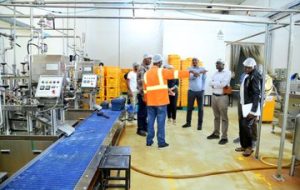
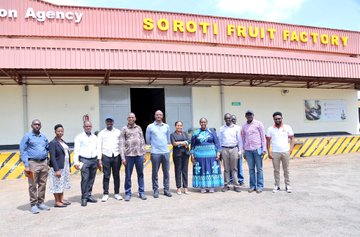
Soroti — The government has unveiled major plans to expand and modernise the Soroti Fruit Factory, in a move officials say will significantly boost value addition, industrialisation, and economic transformation in the Teso sub-region.
According to the Permanent Secretary and Secretary to the Treasury (PSST), Ramathan Ggoobi, the expansion—estimated to cost USD 30 million—will be undertaken in partnership with a management firm from Ethiopia that is already involved in improving the factory’s operations.
Ggoobi made the announcement this week during a performance assessment visit to Soroti Fruits Ltd, following a directive from President Yoweri Kaguta Museveni.
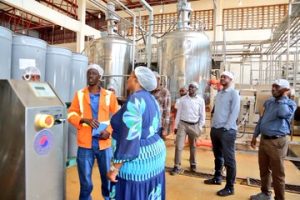
“Plans are underway to expand and modernise Soroti Fruit Factory in partnership with a management firm from Ethiopia,” Ggoobi said, adding that construction of the new facility would take about two years to become fully operational.
He emphasised that the factory is “changing the destiny of the region in terms of processing and adding value.”
The PSST was accompanied by the Permanent Secretary of the Ministry of Trade, Industry and Cooperatives, Lynette Bagonza, the Director of Economic Affairs at the Ministry of Finance, Moses Kaggwa, and commissioners from both Finance and Trade ministries.

Ggoobi applauded the Ethiopian partners for their role in strengthening management systems and improving production efficiency at the plant.
The Chief Commercial Officer of Soroti Fruits Ltd, TsegaMariam Tesfaye, expressed gratitude to the Ugandan government and President Museveni for the continued support toward the factory’s vision. “We are grateful for the opportunity to work together to industrialise and transform the region,” she said.
According to the Ministry of Finance, the proposed new plant will feature advanced technology, including an automatic bottling and packaging line, multi-fruit processing units, and facilities for producing organic fertilisers and animal feeds, among other innovations.
The expansion is expected to deepen value addition for citrus and other fruits, enhance farmer incomes, and create more jobs as the government continues to push industrialisation as a key pillar of economic development.