



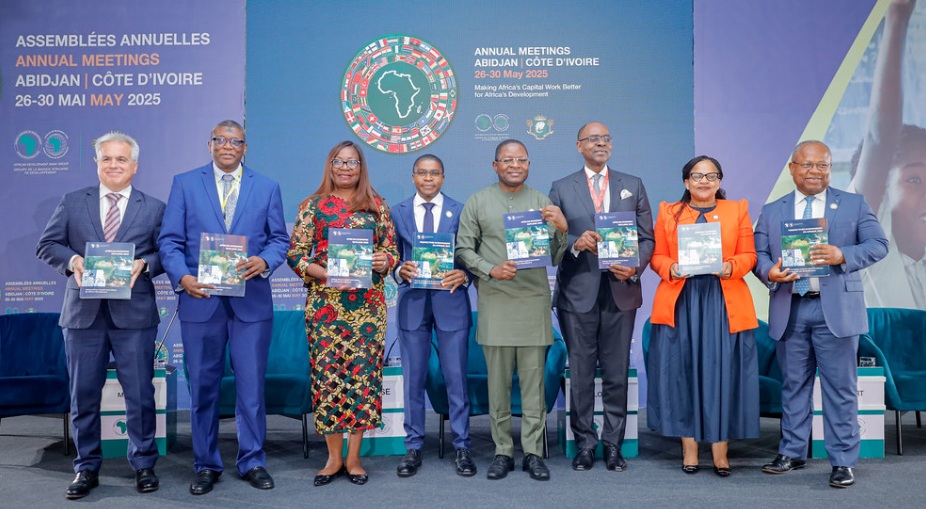
Abidjan – Despite generating $204 billion in revenues each year, Africa loses an estimated $587 billion annually through illicit financial flows, profit shifting, and mismanaged resources—more than the total government revenues of all African countries combined in 2023, according to the African Development Bank’s (AfDB) 2025 African Economic Outlook (AEO).
The report, released against a backdrop of global economic turbulence, highlights that the challenge is not sourcing new capital but retaining and efficiently mobilising the continent’s own resources. April 2025 saw seismic shifts in trade policies among major economies, coupled with significant cuts in development aid from key partners. These changes have created a funding squeeze for low-income African countries that heavily rely on international assistance.
How and Why the $587 Billion Leaves Africa
Illicit Financial Flows (IFFs): The report says money obtained through criminal activity, corruption, and tax evasion often moves across borders. Weak enforcement of anti-money laundering regulations, lack of participation in multilateral initiatives (like FATF-style regional bodies), and limited intelligence sharing between public and private actors exacerbate these flows. Africa participates in frameworks like the Common African Position on Asset Recovery, but technical and institutional capacity gaps limit effectiveness.
Poorly Managed Natural Resources: Contracts for mining, oil, and gas often prioritise foreign investors over the state. Confidential stabilisation clauses in agreements allow investors to benefit even when market conditions change, reducing state revenues. Lack of domestic value addition means raw materials are exported instead of being processed locally, effectively exporting jobs and potential income. Weak enforcement of mining codes and technical limitations prevent governments from capturing full resource rents.
Profit Shifting by Multinational Enterprises: MNEs exploit tax loopholes and weak governance to shift profits out of Africa, avoiding local taxation. Poor financial regulatory systems, weak judiciary, and underfunded anti-corruption agencies make it difficult to detect and penalise such practices.
Weak Governance and Corruption: Public funds are lost through bribery, embezzlement, and opaque procurement systems. Lack of independent law enforcement, judiciary interference, and weak anti-corruption agencies exacerbate capital flight. Political interference in resource allocation and contract management allows elites and external actors to capture wealth.
Inefficient Financial Markets: Underdeveloped capital markets and overly complicated regulations limit access to domestic funding and encourage capital flight to more stable foreign markets. Bureaucratic hurdles, complex tax systems, and regulatory bottlenecks discourage investment and encourage money to flow abroad.
Human Capital Flight: Skilled labour emigrates due to weak institutions, low governance quality, and poor service delivery in the health and education sectors. Africa effectively subsidises developed nations’ human capital needs, losing potential future economic output.
Closing the Leaks
The AEO emphasises that Africa’s lost capital could be recovered through stronger governance, institutional reforms, and technological innovation. Governments are encouraged to digitise processes, adopt biometric technologies, and use blockchain for public procurement and financial systems. Kenya’s e-citizen platform provides a model for using digital tools to streamline payments and enhance transparency.
Independent anti-corruption commissions and well-funded judiciaries are also crucial. The AfDB cites Hong Kong’s transformation of its Independent Commission Against Corruption as a global best practice that African countries can adapt locally. Coordinated collaboration with global partners to tackle illicit financial flows—including enforcing anti-money laundering regulations and recovering stolen assets—is another priority.
Better Use of Natural Capital
Africa’s natural resources, while abundant, are often poorly managed. Mining and petroleum contracts frequently prioritise investor interests over public benefit, involve opaque negotiations, and lack mechanisms for domestic value addition. The AEO recommends enhancing technical capacity, publishing key contract clauses, and monitoring compliance to ensure fair resource rents.
Initiatives like the African Mining Vision (AMV) and the African Legal Support Facility (ALSF) can help African governments negotiate better deals and promote local industrialisation. Additionally, cross-border mineral value chains—such as the DRC-Zambia lithium corridor—can strengthen regional industrial hubs and create domestic employment opportunities while boosting economic resilience.
Mobilising Financial Capital
Africa’s financial markets remain underdeveloped, fragmented, and burdened by regulatory bottlenecks, limiting access to capital. Complex credit reporting, tax systems, and anti-money laundering requirements hinder investment and financial inclusion. Countries like Rwanda, which have streamlined regulatory frameworks, show that reducing bureaucratic barriers improves business efficiency and investment attraction.
The AEO also highlights opportunities in digital finance. Projects like Namibia’s tokenisation of a copper mine and Kenya’s blockchain-based coffee tree initiative demonstrate how financial technology can increase liquidity, broaden investor participation, and expand access to capital for smallholders. Pan-African cooperation through the AfCFTA and shared settlement systems like PAPSS can further integrate markets and boost intra-African investment.
Central banks’ foreign exchange reserves, totalling $411.9 billion in 2023, exceed Africa’s annual infrastructure financing gap. Leveraging these reserves and recycling public assets through initiatives such as Africa50 could fund critical infrastructure projects without relying on foreign aid.
Unlocking Business and Human Capital
Entrepreneurship in Africa is growing, especially among youth and in the technology sectors. Yet, access to finance, supportive infrastructure, and regulatory predictability remain major constraints. E-procurement platforms, like Rwanda’s Umucyo system, demonstrate how transparency and digitisation can foster competition, efficiency, and investor confidence.
Human capital development is equally critical. Weak governance, corruption, and poorly coordinated education and health systems hinder productivity and drive skilled emigration. The AEO recommends investing in vocational training, decentralising education and health governance, and leveraging diaspora skills for knowledge transfer, entrepreneurship, and development financing through diaspora bonds.
The Way Forward
The AfDB stresses that strengthening institutions, enhancing transparency, and enforcing the rule of law are central to retaining Africa’s capital and achieving sustainable, inclusive growth. Coordinated reforms across governance, financial markets, natural resources, and human capital will allow the continent to mobilise its own resources effectively, reduce dependence on external aid, and maximise socio-economic returns for African citizens.
“Unlocking Africa’s potential is not about finding new money,” the report notes. “It is about keeping and wisely investing what we already have.”
With global uncertainties and reduced development assistance, the AEO underscores that Africa’s future rests on strong institutions, digital innovation, and regional collaboration to transform lost capital into sustained growth.